Conscious Fashion Meaning: Aligning Style With Purpose
Plenty of fashion lovers are surprised to learn that over 70 percent of clothing waste in the United States ends up in landfills each year, highlighting a challenge for modern streetwear fans searching for meaning in their wardrobe. As more American and global young adults seek unique pieces that reflect personal and artistic values, conscious fashion stands apart as a solution that marries style with substance. Get ready to discover how thoughtful choices and new brand philosophies can transform the way you approach streetwear.
Table of Contents
- Conscious Fashion Meaning And Core Principles
- Key Elements Of Conscious Clothing Brands
- Types Of Sustainable And Ethical Materials
- How Conscious Fashion Influences Streetwear Culture
- Common Pitfalls And Greenwashing In Fashion
Key Takeaways
| Point | Details |
|---|---|
| Conscious Fashion Philosophy | Focus on making informed clothing choices that prioritize sustainability and ethical production over fleeting trends. |
| Sustainable Material Use | Brands should incorporate organic and recycled materials to reduce environmental impacts, demonstrating commitment to responsible production. |
| Recognizing Greenwashing | Be aware of misleading marketing practices in fashion; always verify sustainability claims and seek out genuine transparency in brands. |
| Influence on Streetwear | Conscious fashion is transforming streetwear into a platform for social expression, emphasizing sustainability and ethical practices in style choices. |
Conscious Fashion Meaning And Core Principles
Conscious fashion represents a transformative approach to clothing consumption that transcends traditional shopping patterns. At its core, this philosophy is about making deliberate, informed choices that prioritize human and environmental well-being over momentary trends. Conscious fashion embodies mindful garment choices that challenge the disposable culture prevalent in modern retail.
The movement centers on several fundamental principles that redefine our relationship with clothing. These include understanding the full lifecycle of garments, recognizing the social and ecological impact of production, and developing a more intentional approach to personal style. Ethical production and sustainable practices become central considerations, moving beyond aesthetic preferences to examine the deeper implications of our fashion selections.
Key characteristics of conscious fashion include:
- Prioritizing quality over quantity
- Investigating supply chain transparency
- Supporting brands with responsible manufacturing practices
- Reducing overall consumption and waste
- Choosing durable, versatile pieces that transcend seasonal trends
Pro tip: Start your conscious fashion journey by auditing your current wardrobe and identifying pieces with lasting value and minimal environmental impact.
Key Elements Of Conscious Clothing Brands
Conscious clothing brands represent a revolutionary approach to fashion that goes far beyond aesthetic appeal. Successful brands integrate sustainable materials through strategic design and ethical production practices that challenge traditional manufacturing models. These innovative brands understand that modern consumers demand transparency, quality, and social responsibility in their clothing choices.
The fundamental elements of conscious clothing brands encompass several critical dimensions. Sustainable material sourcing becomes paramount, with brands prioritizing organic fabrics, recycled textiles, and low-impact production methods. By focusing on ethical production practices, these brands demonstrate a commitment to reducing environmental harm while supporting fair labor conditions across global supply chains.
Key characteristics of conscious clothing brands include:
- Using organic and recycled materials
- Implementing fair-trade labor practices
- Maintaining complete supply chain transparency
- Adopting small-batch production strategies
- Creating durable, timeless design aesthetics
- Minimizing waste through thoughtful manufacturing
Pro tip: Research clothing brands by examining their sustainability reports and certifications to validate their genuine commitment to conscious fashion practices.
Types Of Sustainable And Ethical Materials
Sustainable fashion materials represent a revolutionary approach to textile production that goes beyond traditional manufacturing methods. Sustainable materials are designed to reduce non-renewable resource use while minimizing environmental impact and supporting circular economy principles. These innovative materials transform how we think about clothing production, challenging conventional textile development strategies.

The landscape of sustainable materials encompasses several critical categories that address environmental concerns. Biodegradable fabrics emerge as a powerful solution, with materials derived from natural sources that can decompose without harming ecosystems. Recycled and circular materials play a crucial role in reducing waste and lowering carbon footprints, enabling fashion brands to create more responsible product lines.
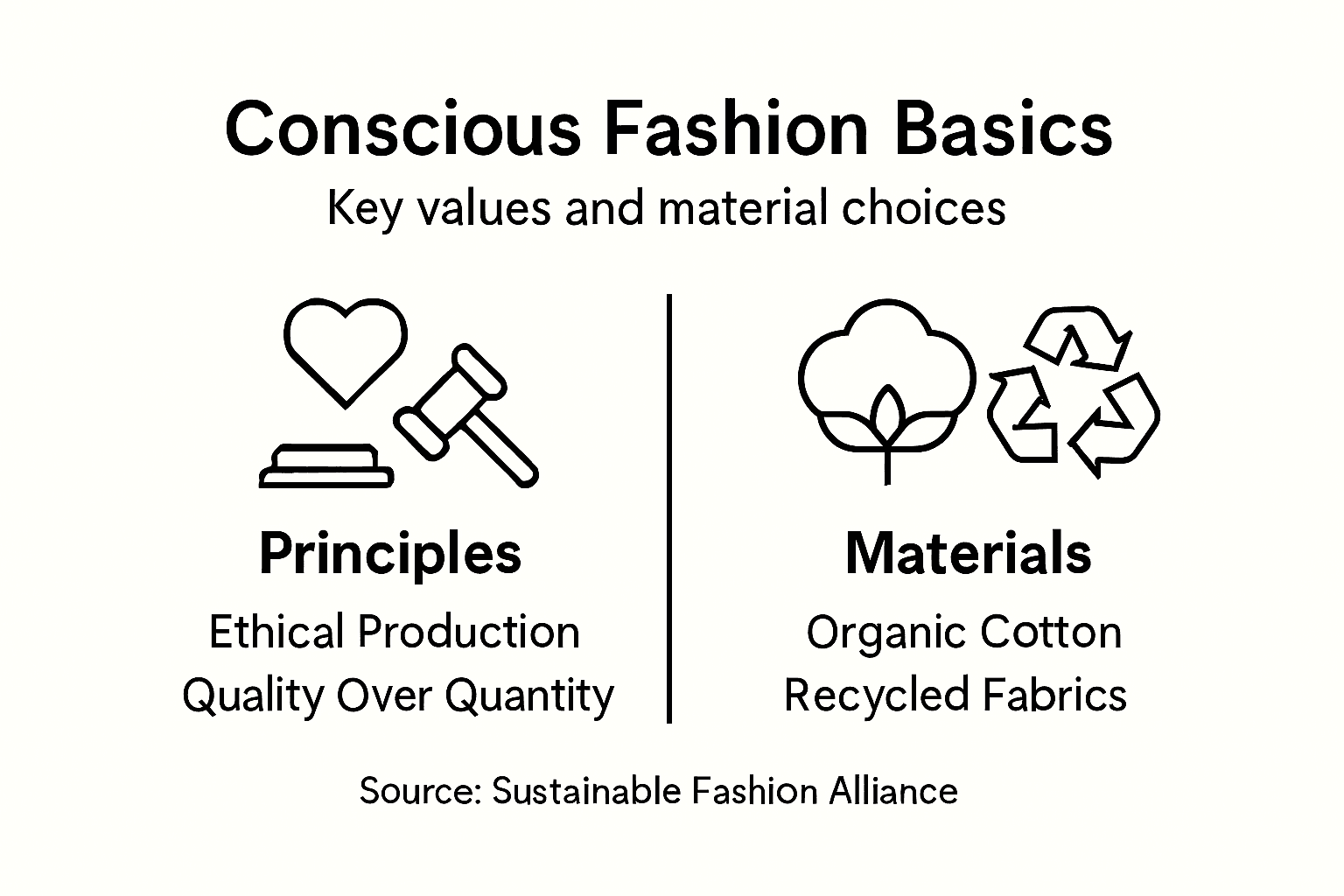
Key types of sustainable and ethical materials include:
Here’s a comparison of common sustainable materials and their environmental benefits:
| Material Type | Key Benefit | Common Uses |
|---|---|---|
| Organic Cotton | Reduces chemical pollution | T-shirts, denim |
| Recycled Polyester | Lowers fossil resource demand | Jackets, activewear |
| Hemp Fibers | Requires minimal water | Bags, casual clothing |
| Bamboo Textiles | Fast-growing, renewable crop | Socks, soft shirts |
| Tencel/Lyocell | Biodegrades easily | Dresses, blouses |
| Plant-Based Leather | Avoids animal products | Shoes, accessories |
- Organic cotton
- Recycled polyester
- Hemp fibers
- Bamboo textiles
- Tencel and lyocell
- Regenerated wool
- Biodegradable synthetic alternatives
- Plant-based leather substitutes
Pro tip: Always check fabric composition labels and research material origins to understand the true sustainability of your clothing choices.
How Conscious Fashion Influences Streetwear Culture
Conscious fashion has revolutionized streetwear by transforming it from a purely aesthetic movement to a powerful platform for social and environmental expression. Streetwear culture now transcends traditional fashion boundaries, embedding deeper values of sustainability, ethical production, and individual responsibility into its core aesthetic. Young creators and consumers are reimagining clothing as a form of personal activism, using their style choices to communicate broader social commitments.
The intersection of conscious fashion and streetwear represents a dynamic reimagining of personal identity and cultural expression. Emerging designers are challenging traditional manufacturing processes by incorporating sustainable materials, transparent supply chains, and innovative design techniques that minimize environmental impact. Ethical design becomes a statement of rebellion against fast fashion’s disposable culture, transforming streetwear into a medium of meaningful self-representation.
Key ways conscious fashion influences streetwear include:
- Prioritizing recycled and sustainable materials
- Promoting small-batch, limited-edition production
- Highlighting artisan and local manufacturing
- Creating clothing with longer lifecycle potential
- Emphasizing cultural storytelling through design
- Challenging mass-production consumption models
- Supporting social and environmental justice movements
Pro tip: Choose streetwear pieces that tell a story beyond aesthetic appeal, focusing on brands that demonstrate genuine commitment to sustainable and ethical practices.
Common Pitfalls And Greenwashing In Fashion
Greenwashing in fashion represents a complex deception that undermines genuine sustainability efforts. This manipulative marketing strategy involves brands creating an illusion of environmental responsibility without implementing meaningful changes. Greenwashing has become a significant challenge for conscious consumers seeking authentic sustainable fashion, requiring sophisticated awareness and critical evaluation of brand claims.
The fashion industry has developed numerous sophisticated techniques to create misleading perceptions of sustainability. Misleading certifications and selective disclosure emerge as primary methods brands use to appear more environmentally responsible than they truly are. These tactics often involve using vague ecological terminology, creating complex narrative frameworks that obscure actual manufacturing practices, and presenting partial information that suggests comprehensive sustainability.
Common greenwashing tactics include:
The following table outlines major signs of greenwashing to watch for when evaluating fashion brands:
| Greenwashing Tactic | Why It’s Misleading | How To Spot It |
|---|---|---|
| Vague eco claims | No evidence supports statements | Look for proof or data |
| Fake certifications | Not recognized by authorities | Research the certifier |
| Focus on one green product | Ignores overall unsustainable line | Examine the full catalog |
| Selective transparency | Omits critical information | Seek supply chain details |
- Using ambiguous eco-friendly language
- Displaying meaningless certifications
- Highlighting minor sustainable practices
- Creating misleading visual marketing
- Exaggerating environmental contributions
- Concealing negative production impacts
- Promoting limited sustainable collections
- Making unverifiable environmental claims
Pro tip: Always research brand sustainability reports, seek third-party certifications, and investigate a company’s complete supply chain before accepting environmental claims at face value.
Transform Your Style With Purpose and Conscious Choices
Navigating the world of conscious fashion means confronting the challenge of finding bold, expressive streetwear that aligns with your values of sustainability and ethical production. If you seek unique, visionary apparel that reflects your personality while embracing mindful style, Eledoasis offers a compelling solution. From durable hoodies and tees to accessories designed for statement-making self-expression, each piece supports your journey toward fashion with meaning.

Explore our collection at Eledoasis.com and experience streetwear that stands out not just in look but in purpose. Choose bold designs crafted with awareness—our range lets you celebrate your individuality while championing conscious practices. Don’t wait to redefine your wardrobe with pieces that tell a story beyond trends. Visit Eledoasis now and awaken your style to new possibilities through fashion that speaks your truth.
Frequently Asked Questions
What does conscious fashion mean?
Conscious fashion refers to a mindful approach to clothing consumption that prioritizes ethical production, sustainability, and a reduced environmental impact over fleeting trends.
What are the core principles of conscious fashion?
The core principles include prioritizing quality over quantity, understanding garment lifecycles, ensuring supply chain transparency, supporting ethical manufacturing, and minimizing waste.
How can I start practicing conscious fashion?
Begin by auditing your wardrobe, identifying pieces that provide lasting value, and considering factors such as material origins and sustainability reports when making future purchases.
What are common types of sustainable materials used in conscious fashion?
Common sustainable materials include organic cotton, recycled polyester, hemp fibers, bamboo textiles, and plant-based leather, all designed to minimize environmental impact and support ethical practices.