Fashion Reflects Worldview and Identity
Why Fashion Reflects Worldview and Identity
Fashion speaks louder than any slogan—over 80 percent of young adults say their clothing choices reflect their beliefs and personality. For streetwear lovers drawn to bold statements, this means every outfit becomes a personal canvas. American, Japanese, and African influences are remixing global style, giving you endless options to broadcast your unique vision. Get ready to dig into the deeper meaning behind what you wear and see how fashion can amplify your own worldview.
Table of Contents
- Defining Fashion As A Reflection Of Worldview
- Styles That Communicate Identity And Beliefs
- Cultural Influences Shaping Fashion Choices
- Historical Trends Mirroring Social Values
- Risks Of Misinterpretation And Stereotyping
Key Takeaways
| Point | Details |
|---|---|
| Fashion as Communication | Fashion is a visual dialogue that communicates personal identities, beliefs, and cultural affiliations without words. |
| Cultural Significance | Clothing is deeply connected to cultural heritage, encoding historical narratives and societal identities. |
| Sociological Indicators | Fashion trends serve as reflections of social values, indicating broader cultural shifts and movements. |
| Risks of Misinterpretation | Caution is necessary to avoid cultural appropriation and oversimplified representations that can perpetuate stereotypes. |
Defining Fashion As A Reflection Of Worldview
Fashion represents far more than fabric and design - it’s a profound language of human expression. Symbolic communication through clothing reveals complex narratives about personal identity, cultural background, and individual worldviews that extend far beyond surface aesthetics.
At its core, fashion functions as a dynamic visual dialogue where individuals communicate their philosophical perspectives, moral values, and inner belief systems through carefully curated style choices. Personal style becomes a nuanced form of nonverbal communication, allowing people to broadcast their cultural affiliations, emotional states, and fundamental perspectives without uttering a single word. Whether through streetwear’s rebellious edge, minimalist design’s disciplined approach, or traditional cultural garments, clothing serves as a powerful medium for self-representation.
Research exploring fashion’s expressive dimensions demonstrates how clothing transcends mere functional coverage. It operates as a sophisticated system of signs and symbols that encode complex social messages. Different style choices can signify resistance, solidarity, personal transformation, or cultural heritage - transforming fashion from a purely aesthetic practice into a deeply meaningful form of personal and collective storytelling.
Pro tip:Approach your personal style as a deliberate form of self-expression, understanding that every clothing choice communicates something about your inner world and perspectives.
Styles That Communicate Identity And Beliefs
Fashion styles are powerful narratives that extend beyond aesthetic choices, serving as intricate visual languages through which individuals articulate complex personal identities. Fashion reflects social environment by encoding nuanced messages about cultural background, personal beliefs, and social positioning through carefully curated clothing selections.
Different style categories act as unique communication channels. Streetwear might signal urban rebelliousness and youth culture, while minimalist designs could represent discipline and intellectual sophistication. Traditional cultural garments communicate deep connections to heritage, ancestry, and collective historical experiences. Each style becomes a deliberate performance of identity, allowing individuals to visually negotiate their place within broader social contexts and communicate intricate aspects of their inner worldview.

Gendered expressions of belief demonstrate how fashion transcends mere clothing to become a sophisticated medium of personal and collective storytelling. From conservative religious attire to progressive avant-garde fashion, style choices reveal complex layers of personal philosophy, social positioning, and individual autonomy. Digital platforms and global connectivity have further amplified fashion’s role as a dynamic, borderless language of self-expression, enabling individuals to craft and communicate multifaceted identities instantaneously.
Pro tip:Experiment with fashion styles as intentional forms of communication, understanding that every outfit represents a nuanced statement about your personal narrative and worldview.
Here’s a comparison of major fashion styles and what they communicate:
| Fashion Style | Key Message | Typical Audience |
|---|---|---|
| Streetwear | Rebellion, urban roots | Youth, creatives, subcultures |
| Minimalist | Discipline, intellect | Professionals, modern thinkers |
| Traditional Garments | Heritage, ancestry | Cultural communities, families |
| Avant-garde | Innovation, progress | Designers, artists, trendsetters |
Cultural Influences Shaping Fashion Choices
Cultural heritage serves as a profound blueprint for fashion expression, creating intricate connections between clothing and societal identity. Traditional clothing reflects cultural identity by encoding complex historical narratives, environmental adaptations, and social traditions through fabric, design, and stylistic choices.
Fashion emerges as a dynamic dialogue between tradition and contemporary global influences. Indigenous textile patterns, regional color preferences, and historical costume elements blend with modern design aesthetics, creating unique style languages that communicate deep cultural experiences. Traditional garments like Japanese kimonos, Native American ribbon shirts, or African wax print fabrics represent more than clothing - they are living archives of collective memory, resistance, and cultural resilience.
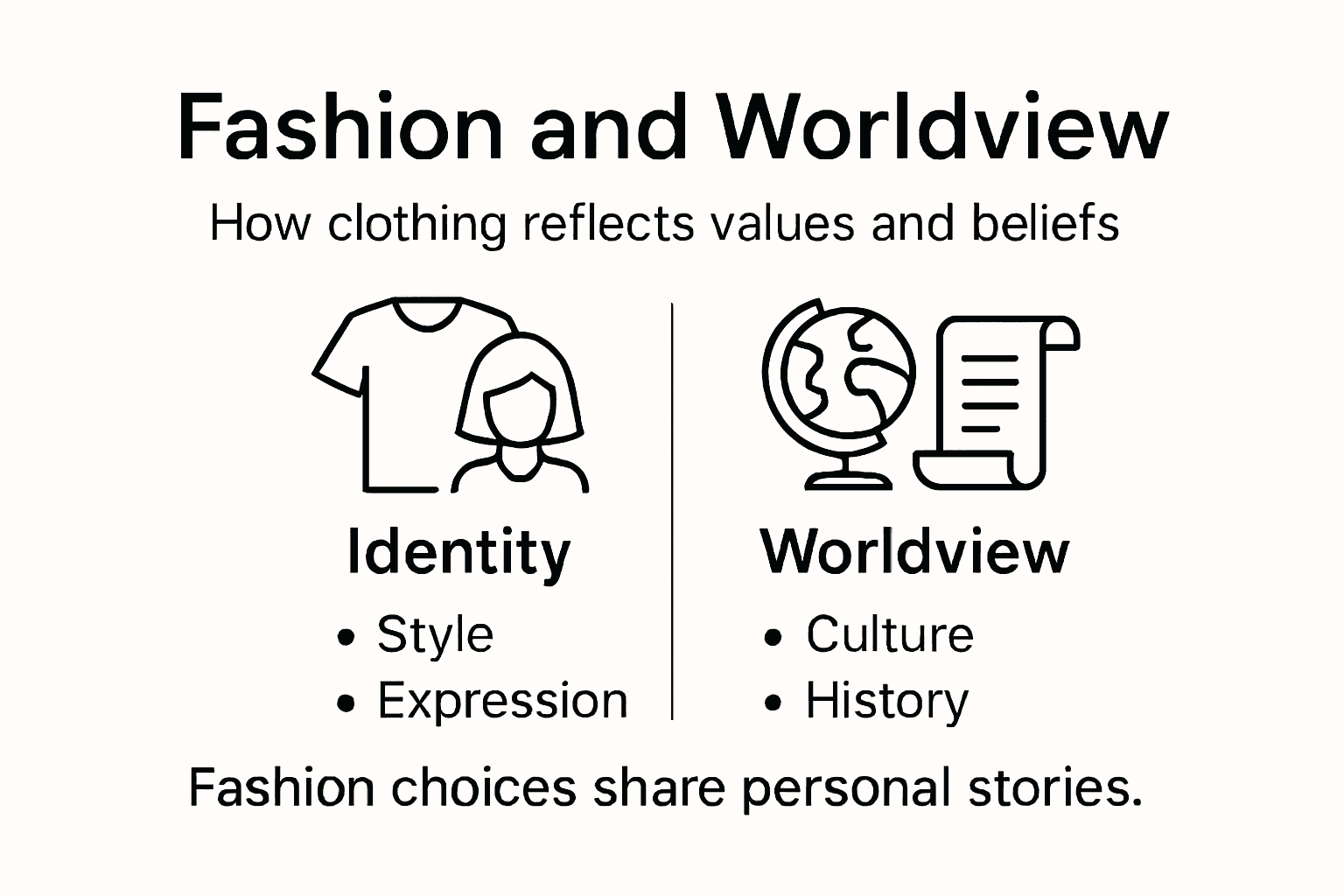
Cultural influences in fashion design demonstrate how globalization has transformed fashion into a rich, interconnected ecosystem. Contemporary designers increasingly draw inspiration from diverse cultural traditions, creating fusion styles that challenge traditional boundaries. This cross-cultural exchange allows fashion to become a powerful medium for understanding, respecting, and celebrating global diversity, transforming clothing from mere functional coverings into sophisticated forms of cultural dialogue and mutual understanding.
Pro tip:Explore fashion as a form of cultural storytelling by intentionally incorporating elements that honor and celebrate your personal heritage and global connections.
Historical Trends Mirroring Social Values
Fashion trends operate as powerful sociological indicators, silently narrating complex stories of human experience and social transformation. Fashion reflects social standards by encoding intricate messages about economic conditions, cultural shifts, and evolving societal values through clothing styles and design aesthetics.
Throughout history, fashion has served as a visual chronicle of social movements and cultural revolutions. The structured corsets of the Victorian era symbolized rigid gender constraints, while the rebellious flapper dresses of the 1920s represented women’s emerging liberation. Punk fashion of the 1970s communicated working-class frustration and anti-establishment sentiment, using torn clothing and provocative styles as direct political statements. Each fashion era becomes a tangible representation of its time’s underlying social dynamics, power structures, and collective psychological landscapes.
Fashion trends as social commentary reveal how clothing transcends mere aesthetic expression to become a nuanced language of social discourse. Contemporary fashion continues this tradition, with sustainable clothing reflecting environmental consciousness, gender-fluid designs challenging traditional binary constructs, and streetwear representing global youth cultural resistance. These styles communicate complex narratives about identity, resistance, and collective aspiration, transforming fashion from a superficial practice into a profound medium of social dialogue and cultural understanding.
Pro tip:Analyze your wardrobe as a personal historical document, recognizing how your fashion choices reflect and potentially challenge the social values of your time.
Here’s a summary of how historical fashion trends mirror social change:
| Era | Signature Trend | Reflected Value | Social Impact |
|---|---|---|---|
| Victorian | Corsets, formalwear | Gender roles, status | Reinforced class divisions |
| 1920s | Flapper dresses | Liberation, modernity | Advanced women’s freedom |
| 1970s | Punk, torn clothing | Anti-establishment, frustration | Fueled youth resistance |
| 2020s | Sustainability, fluidity | Environmental awareness, inclusivity | Challenged tradition |
Risks Of Misinterpretation And Stereotyping
Cultural fashion representation demands careful navigation to avoid oversimplifying complex identities and experiences. Fashion encounters create misunderstandings when styles are appropriated without understanding their deeper cultural significance, leading to harmful stereotyping and reductive narratives about diverse communities.
Global fashion industries often perpetuate problematic representations by exoticizing or commodifying cultural clothing traditions. Traditional garments like Native American headdresses, African tribal prints, or Indigenous ceremonial wear can be stripped of their profound cultural meanings when transformed into trendy fashion statements. This process of decontextualization not only disrespects the original cultural significance but also reinforces colonial power dynamics that reduce rich cultural expressions to mere aesthetic accessories.
Minority fashion expressions face marginalization through mainstream fashion’s often narrow and reductive lens. When designers and consumers fail to engage with the nuanced stories behind different fashion traditions, they risk creating harmful stereotypes that flatten complex cultural identities into simplistic, often exoticized representations. Understanding fashion requires deep cultural literacy, empathy, and a commitment to recognizing the profound personal and collective narratives embedded in clothing choices.
Pro tip:Before adopting fashion elements from cultures not your own, invest time in understanding their authentic context, historical significance, and cultural meaning.
Express Your Unique Worldview Through Fashion
The article highlights how fashion is a powerful language that communicates your personal identity and worldview. Many readers struggle with finding styles that truly reflect their inner beliefs and cultural background without risking misinterpretation or stereotyping. At Eledoasis, we understand that your clothing choices are more than just fabric and design — they are bold statements of self-expression and cultural storytelling. Our streetwear-inspired collection is crafted for those who want to showcase their individuality, creativity, and values through standout apparel that merges art and symbolism.

Discover how our curated hoodies, tees, hats, and accessories allow you to embrace your personal narrative and express your unique vision with confidence. Don’t settle for typical fashion that blends in. Visit Eledoasis today and start building a wardrobe that speaks volumes about your identity and worldview. Explore our collection now to find your style voice and awaken a bold new chapter in your fashion journey.
Frequently Asked Questions
How does fashion communicate personal identity?
Fashion communicates personal identity through individual style choices that reflect beliefs, cultural background, and emotional states. Clothing acts as a visual language that allows people to express their unique narratives without words.
What role do cultural influences play in fashion choices?
Cultural influences shape fashion choices by embedding historical narratives and social traditions into clothing designs. Traditional garments often represent deep connections to cultural heritage and serve as a means to honor one’s ancestry.
How do historical trends in fashion reflect societal values?
Historical trends in fashion serve as indicators of societal values by mirroring the cultural and social movements of their time. Each era’s fashion highlights the prevailing beliefs, norms, and collective experiences of society.
What are the risks of misinterpreting cultural fashion representations?
The risks include oversimplifying complex identities, perpetuating stereotypes, and commodifying cultural traditions without understanding their significance. This can lead to disrespectful representations that fail to honor the original meanings of traditional garments.