How to mix patterns in streetwear: 2026 expert guide
You’ve got the boldest graphic tee, a killer pair of striped pants, and a leopard print cap, but standing in front of the mirror, you freeze. Does this work? Will people think you tried too hard, or worse, that you have no clue what you’re doing? Mixing patterns in streetwear should be your ultimate power move for expressing individuality, yet most fashion lovers hesitate, stuck between playing it safe and going full maximalist. This guide breaks down the exact methods fashion experts use to mix patterns confidently, from foundational color anchors to bold clashing combos that defy old rules. You’ll walk away with actionable steps, real examples, and the courage to layer prints like a pro.
Table of Contents
- Key takeaways
- Preparing your streetwear pattern mix: tools and style essentials
- Step-by-step guide to mixing patterns confidently in streetwear
- Embracing bold pattern clashes: pushing streetwear style boundaries
- Explore ELEDOasis streetwear essential pieces
- Frequently asked questions about mixing patterns in streetwear
Key Takeaways
| Point | Details |
|---|---|
| Scale contrast | Use large and small pattern scales together to create a clear hierarchy instead of visual noise. |
| Color anchors | Choose one or two colors that appear in multiple patterns to create cohesion across pieces. |
| Neutral grounding | Incorporate solid neutrals like black, white, or gray to give the eye a resting place between bold prints. |
| Limit pattern count | Start with one dominant pattern and limit outfits to three total patterns to prevent visual chaos. |
| Start with anchors | Begin with accessories and anchor pieces to test combinations before layering bolder prints. |
Preparing your streetwear pattern mix: tools and style essentials
Before you throw on every print in your closet, you need to understand the mechanics that make pattern mixing work instead of clash. The core principles are varying scale, common color, neutrals, and pattern limits, and these aren’t just abstract concepts. They’re your toolkit for creating outfits that look intentional, not accidental.
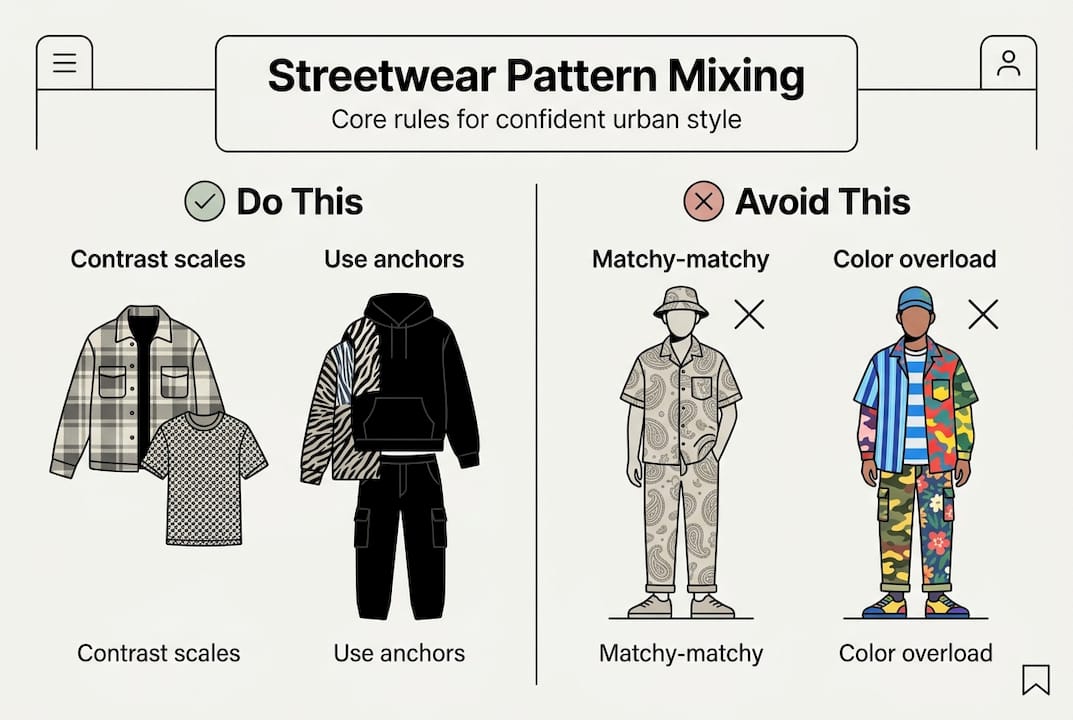
Pattern scale refers to the size and visual weight of a print. A large geometric print commands attention differently than micro polka dots. When you pair patterns of similar scale, they compete for your eye’s focus, creating visual noise. Contrasting scales creates hierarchy: one pattern dominates while the other supports. Think oversized plaid shirt with fine pinstripe pants, or bold leopard spots with tiny gingham checks.
Color anchors are your secret weapon for cohesion. Pick one or two colors that appear in both patterns, and suddenly prints that seemed incompatible start talking to each other. A red floral tee and red striped joggers share that anchor, making the combination feel deliberate. You can also mix art with streetwear for unique style by treating artistic prints as your anchor pattern, then building around its dominant color.
Neutrals ground your look and give the eye somewhere to rest. Black jeans, white sneakers, or a gray hoodie act as visual buffers between competing patterns. Without neutrals, you risk sensory overload. They also let you push boundaries with bolder pattern choices because you’ve built in balance.
Essential items for pattern mixing:
- One dominant statement pattern piece (graphic tee, patterned jacket, or printed pants)
- Neutral base layers (solid color tees, plain hoodies, black or white bottoms)
- Smaller scale secondary pattern (striped socks, checkered cap, subtle print accessories)
- Solid color sneakers or boots to anchor the outfit
- Layering pieces in neutrals (denim jacket, bomber, solid overshirt)
Start your wardrobe with pieces that offer pattern and color matching flexibility. Look for items with two or three colors max, avoiding overly busy prints until you’re comfortable with the basics.
Pro Tip: Begin with one dominant pattern and limit yourself to three total patterns in any outfit. This prevents visual chaos while you build confidence and learn what combinations feel right on your body.
Step-by-step guide to mixing patterns confidently in streetwear
Now that you understand the fundamentals, here’s the exact process for mixing patterns that works every time. Follow these four steps in order, and you’ll build outfits that look curated, not confused.
1. Identify your color anchor
Choose one color that will appear in at least two of your patterned pieces. This creates instant visual connection. If your graphic tee features blue and yellow, look for pants with blue stripes or a yellow checkered accessory.
2. Contrast your scales
Pair a large, bold pattern with a smaller, subtler one. Oversized florals work with thin pinstripes. Chunky plaids balance micro polka dots. This hierarchy prevents patterns from fighting for attention.
3. Ground with neutrals
Add at least one solid neutral piece to your outfit. This could be your base layer, your shoes, or an outer layer. The neutral acts as a visual palate cleanser and prevents pattern overload.
4. Test with accessories first
Before committing to full pattern on pattern looks, experiment with streetwear accessory styling by adding a patterned hat, bag, or socks to an outfit with one main pattern. This low-risk approach builds your eye for what works.
Safe pattern pairing strategies:
- Animal prints act as neutrals: Leopard, zebra, and snake prints surprisingly work with almost anything because they mimic natural textures
- Stripes plus florals: The geometric structure of stripes balances organic floral shapes
- Checks with abstract graphics: The regularity of checks grounds chaotic artistic prints
- Polka dots with plaids: Small dots provide texture without competing with plaid’s bold lines
When mixing prints without clashing, vary not just scale but also pattern type. Pairing two geometric patterns (stripes and checks) requires more skill than mixing geometric with organic (stripes and florals).
| Pattern Combo | Risk Level | How to Execute |
|---|---|---|
| Stripes + Florals | Low | Use shared color anchor, contrast scales |
| Plaid + Polka Dots | Low | Keep one pattern small, use neutral base |
| Animal + Geometric | Medium | Treat animal print as neutral, limit to two patterns |
| Florals + Leopard | Medium | Match color intensity, add solid layer |
| Plaid + Stripes | High | Vary scale dramatically, strong color anchor |
| Multiple Geometrics | High | Requires advanced eye, use monochrome palette |
Pro Tip: Master streetwear layering techniques to add depth to pattern mixing. A solid overshirt worn open over a patterned tee, with patterned pants peeking through, creates intentional visual layers that feel editorial.
Embracing bold pattern clashes: pushing streetwear style boundaries
The rules you just learned? They’re training wheels. Real streetwear culture celebrates the confident rule breakers who clash patterns in ways that shouldn’t work but absolutely do. Fashion experts increasingly advocate for maximalist approaches that throw caution aside, and the results can be stunning when executed with conviction.
Controlled clashing means intentionally pairing patterns that traditional fashion advice says don’t belong together. Florals with leopard print. Horizontal stripes with vertical stripes. Plaid with paisley. The key word is controlled: you’re making deliberate choices, not throwing on random pieces.
“The old rules about matching patterns perfectly are outdated. Streetwear is about confidence and personal expression. If you feel it, wear it. The attitude you bring to a bold pattern clash matters more than whether the prints ‘technically’ work together.” — Fashion stylist consensus on modern pattern mixing
This philosophy dominates runway pattern clashing and street style photography. What makes it work is commitment. Hesitation reads as a mistake, but confidence reads as intentional style.
Techniques for bold pattern clashing:
- Layer with purpose: Use a patterned jacket over a different patterned shirt, leaving both partially visible to create depth
- Monochrome clashing: Mix multiple patterns in the same color family (all blues, all earth tones) to unify disparate prints
- Texture variation: Combine smooth patterns with textured ones (silk floral scarf with corduroy plaid jacket) to add dimension
- Accessorize fearlessly: Stack patterned accessories like a striped beanie with checkered bag and floral socks
- Break symmetry: Avoid matchy-matchy by ensuring patterns differ in every aspect (scale, type, orientation)
You can explore urban fashion styling tips that emphasize this fearless approach. The streetwear community rewards innovation over adherence to outdated fashion rules.
Start your clashing experiments with pieces you already love individually. If you’re obsessed with both your tiger print hoodie and your geometric joggers, find a way to make them work together rather than keeping them separate. Add a solid black tee underneath, white sneakers, and suddenly the clash feels intentional.
The most important tool for pulling off bold clashes is self-assurance. Wear your combinations like they were obvious choices, and others will see them that way too. Check out streetwear outfit ideas for 2026 to see how contemporary stylists are pushing these boundaries in real-world looks.
Explore ELEDOasis streetwear essential pieces
You’ve learned the techniques, practiced the principles, and you’re ready to build pattern-mixed outfits that turn heads. ELEDOasis offers the versatile, bold pieces that make pattern mixing effortless. Our collection bridges artistic expression with functional streetwear, giving you the building blocks for unlimited creative combinations.
Start with our moisture-wicking athletic tees as your neutral foundation. These performance basics provide the perfect canvas for layering patterned jackets, printed pants, or bold accessories. The clean silhouette and quality construction mean they won’t compete with your statement patterns.

Pair your mixed pattern looks with women’s athletic shoes for comfort that ground even your boldest combinations. Solid color footwear anchors busy prints while keeping your outfit wearable for all-day adventures. Complete your look with utility crossbody bags that add functional edge without pattern overload, or choose patterned versions to push your mixing skills further. Every piece in our collection is designed for the fashion-forward individual ready to express their unique vision through fearless style choices.
Frequently asked questions about mixing patterns in streetwear
How do I start mixing patterns without feeling overwhelmed?
Begin with accessories like a patterned cap or socks paired with one main patterned piece and solid neutrals. This low-risk approach lets you test combinations and build confidence before committing to full pattern-on-pattern outfits. Focus on one shared color between your patterns to create instant cohesion.
What colors work best as anchors in pattern mixing?
Primary and secondary colors (red, blue, yellow, green, orange, purple) work excellently as anchors because they’re easy to identify across different patterns. Neutrals like black, white, and gray also function as universal anchors. Pick the most prominent color in your dominant pattern, then find that same color in your secondary pattern for foolproof coordination.
Can I wear animal prints with other patterns?
Absolutely, and you should. Animal prints like leopard, zebra, and snake function as neutrals in streetwear because they mimic natural textures. Pair them confidently with florals, stripes, or geometric prints. The key is treating the animal print as your neutral base rather than your statement piece, then building around it.
How do I fix a pattern clash that looks off?
Add a solid neutral layer to break up competing patterns, or remove one pattern entirely and replace it with a solid. If patterns share no common colors, introduce an accessory in a bridging color that appears in both. Sometimes the issue is scale: swap one pattern for a smaller or larger version to create better contrast and hierarchy.
What if I want to break the rules completely?
Go for it with full commitment. Style streetwear for bold self-expression by trusting your instincts and wearing your clashes with confidence. The streetwear community celebrates fearless experimentation. Start with monochrome clashing (multiple patterns in one color family) if you want a safety net, or dive straight into maximalist mixing. Your attitude sells the look more than perfect coordination ever could.