Personal Branding in Fashion—Why It Matters Now
Personal Branding in Fashion—Why It Matters Now
Standing out in a world where trends move fast can feel tough, especially when everyone is trying to flex their own style. The truth is, your fashion choices say more than words ever could—they reflect your beliefs, ambitions, and even your spot in your community. By mastering personal branding in fashion, you do more than dress well. You communicate your identity, build real connections, and shape how the world sees you every single day.
Table of Contents
- Personal Branding In Fashion Explained
- Why This Matters For Your Generation
- The Core Components Of Personal Branding In Fashion
- Authenticity Is Non-Negotiable
- Personal Branding Vs. Following Trends
- Major Types Of Personal Brand Expression
- Visual Style Expression
- Reputation And Credibility Expression
- Online Presence Expression
- Community And Networking Expression
- Reputation Management Through Differentiation
- How Fashion Strengthens Self-Identity
- Fashion As A Mirror Of Your Inner Self
- The Identity-Strengthening Loop
- Authenticity Strengthens Identity More Than Trends
- Fashion As Active Identity Construction
- The Connection Between Wardrobe And Self-Concept
- Impacts On Career, Influence, And Community
- Career Advancement Through Personal Branding
- Building Professional Networks And Social Capital
- Visibility And Influence Within Communities
- The Ripple Effect On Your Community
- Real Outcomes: Where This Matters Most
- Why Your Generation Has An Advantage
- Common Pitfalls And How To Avoid Them
- Pitfall 1: Prioritizing Aesthetics Over Authenticity
- Pitfall 2: Confusing Personal Branding With Self-Promotion
- Pitfall 3: Expecting Instant Results
- Pitfall 4: Neglecting Strategic Coherence
- Pitfall 5: Copying Instead Of Creating
- Pitfall 6: Abandoning Your Brand When It Evolves
- Pitfall 7: Ignoring Regular Evaluation
Key Takeaways
| Point | Details |
|---|---|
| Authenticity is Essential | Personal branding in fashion relies on genuine self-expression and aligning your wardrobe with your true identity. Without authenticity, your image may become superficial and untrustworthy. |
| Strategic Consistency Matters | Establishing a cohesive personal brand requires clear values and consistently reflecting them in your style, both online and offline. Regular evaluations ensure continued alignment with your evolving identity. |
| Impact on Career and Community | A strong personal brand enhances career opportunities, social capital, and visibility within communities, ultimately positioning you for advancement and collaboration. |
| Beware of Common Pitfalls | Avoid mistakes like prioritizing aesthetics over authenticity or copying others, as these can dilute your unique brand and hinder growth. Regular audits and honest self-assessment are key to maintaining a robust brand. |
Personal Branding in Fashion Explained
Personal branding in fashion is about creating a distinct identity that sets you apart in a crowded marketplace. It goes beyond wearing clothes—it’s about communicating who you are, what you value, and how you want the world to perceive you through your style choices.
At its core, personal branding involves establishing a unique identity and consistently presenting yourself in a way that aligns with your values and goals. Think of it as the visual and cultural story you tell through your wardrobe, accessories, and how you move through spaces. Unlike corporate branding, personal branding in fashion is intimate; it reflects your authenticity and evolves as you do.
Why This Matters for Your Generation
You’re growing up in an era where self-expression through fashion isn’t just accepted—it’s expected. Streetwear culture thrives on individuality. Your personal brand becomes your currency in social spaces, online communities, and creative industries.
Here’s what personal branding accomplishes for you:
- Builds credibility when your style consistently reflects your values and personality
- Creates community by attracting people who share your aesthetic and ethos
- Opens opportunities in creative fields, collaborations, and brand partnerships
- Establishes authority as someone who understands fashion and culture on your own terms
- Protects your authenticity by intentionally controlling your narrative instead of letting trends dictate it
The Core Components of Personal Branding in Fashion
Personal branding isn’t random; it’s strategic. Personal branding involves establishing a unique identity through deliberate choices about positioning and consistent self-presentation.
Your personal brand consists of these elements:
- Visual Identity — Your signature colors, silhouettes, and aesthetics that become recognizable
- Values Alignment — Ensuring your clothing choices reflect what you actually believe in, not what’s viral
- Consistency — Repeating key elements so people recognize you and your style immediately
- Authenticity — Choosing pieces that genuinely resonate with you, not performative selections
- Evolution — Allowing your brand to grow as your perspective and style mature
Authenticity Is Non-Negotiable
You’ve probably noticed that forced personal brands feel fake. They don’t land. Audiences—especially your generation—detect inauthenticity instantly. Your personal brand works only when it represents the genuine version of yourself.
This doesn’t mean you’re locked into one aesthetic forever. It means your choices come from intention, not imitation. When you wear pieces that reflect your actual identity, people respond to the confidence and coherence.
Authenticity is the foundation of a sustainable personal brand. Without it, your image becomes a costume instead of an expression.
Personal Branding vs. Following Trends
There’s a fundamental difference between having a personal brand and chasing trends. Trends are temporary; personal brands are lasting. You can incorporate trends into your brand when they align with your identity, but the brand itself stays consistent.
Personal branding gives you the framework to selectively adopt trends that enhance your identity rather than replace it. This is how you stay current without losing yourself.
Pro tip:Audit your closet: identify 3-5 core visual elements (colors, silhouettes, or styles) that appear repeatedly. These form the foundation of your personal brand—build new pieces around them.
The following table compares authentic personal branding versus trend-focused branding and their long-term effects:
| Approach | Short-Term Outcome | Long-Term Outcome |
|---|---|---|
| Authentic Branding | Confident self-presentation | Lasting credibility and growth |
| Trend-Chasing | Quick attention boost | Loss of identity, inconsistent image |
Use this comparison to guide your fashion decisions toward sustained personal success.
Major Types of Personal Brand Expression
Personal brand expression isn’t one-size-fits-all. Different people communicate their identity through different channels and styles. Understanding the major types helps you recognize which resonates with you and how to develop yours authentically.
Visual Style Expression
This is the most obvious type—what people see when they look at you. Visual style expression includes your clothing choices, color palette, accessories, and overall aesthetic. It’s the first language of personal branding in fashion.
Visual branding works because it communicates instantly. Before someone hears you speak, your clothes already tell a story. In streetwear culture, this is everything—your fit is your statement.
Key elements of visual expression:
- Color signature — Repeating colors that become synonymous with you
- Silhouette consistency — Recognizable cuts and proportions you favor
- Accessory identity — Signature pieces like hats, bags, or jewelry
- Detail orientation — Unique touches like patches, graphics, or layering techniques
Reputation and Credibility Expression
Your reputation is how people perceive your reliability, skills, and character. Personal brand equity depends on stakeholder attitudes and behaviors toward your brand over time.
This type develops through consistent behavior, authentic interactions, and how you handle challenges. If you claim to care about sustainable fashion but constantly buy fast fashion, your reputation suffers. Credibility is earned, not claimed.
Online Presence Expression
Your digital footprint is now inseparable from your personal brand. Online presence includes your social media aesthetic, how you engage with communities, and what content you share or create.
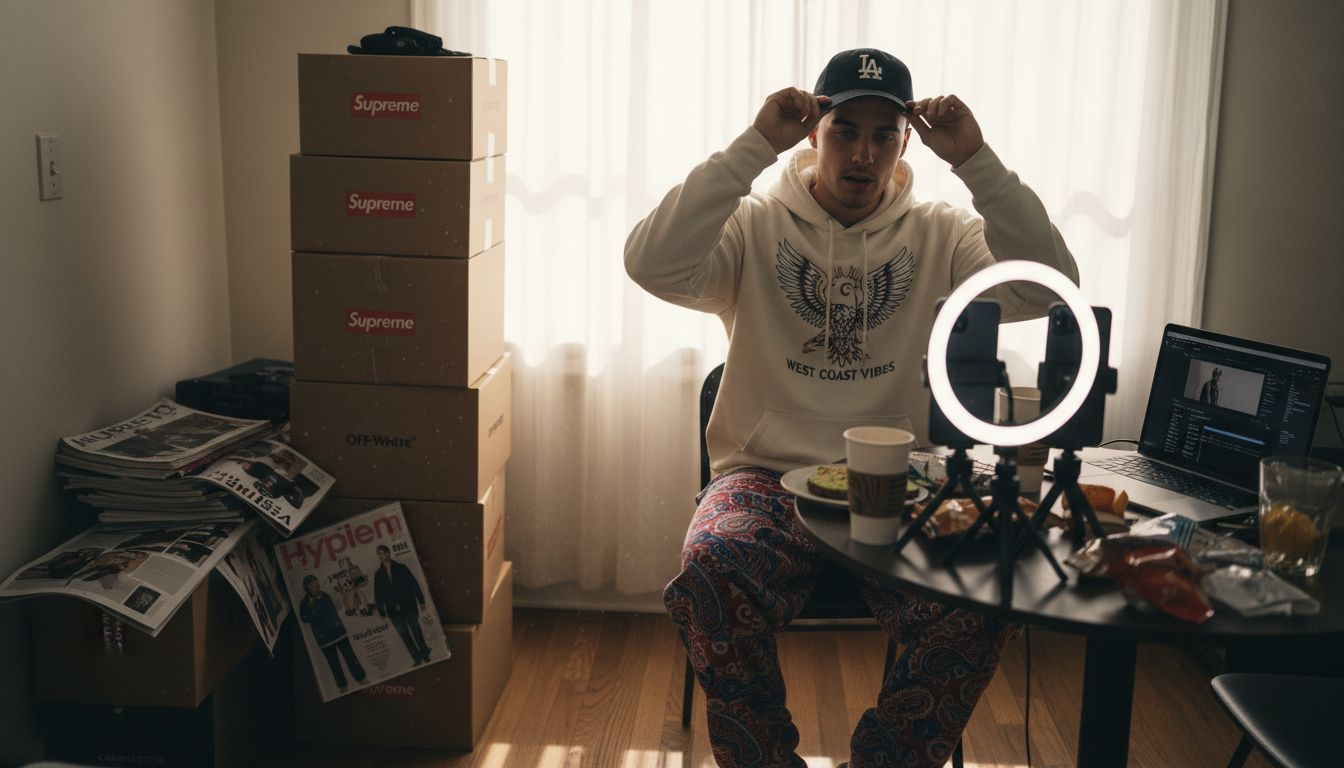
For your generation, this matters enormously. Your Instagram feed, TikTok presence, and how you comment on posts all contribute to your brand perception. The consistency between your physical style and online presentation strengthens your overall brand.
Key online expression elements:
- Content curation — What you share reflects your values and taste
- Engagement style — How authentically you interact with communities
- Aesthetic cohesion — Visual consistency across platforms
- Commentary and voice — Your perspective on fashion and culture
Community and Networking Expression
You express your brand through the people you align with and communities you join. This type shows where you belong and what tribes value you.
Choosing to engage with specific fashion communities, collaborating with designers, or being active in underground streetwear scenes—these are all brand expressions. They signal your values and position you within cultural hierarchies.
Reputation Management Through Differentiation
What sets you apart? Brand differentiation creates recognition in crowded markets. Your personal brand expression should highlight what makes you distinctly you, not what makes you fit in.
This could be your perspective on fashion’s role in activism, your cultural background influencing your style, or your unique approach to mixing genres. Differentiation is what prevents your brand from blending into the background.
Your personal brand expression should feel like a natural reflection of who you are, not a curated performance for external validation.
Pro tip:Audit each expression type separately: evaluate your visual style, online presence, reputation, and community connections. Identify which need strengthening to create a more cohesive overall personal brand.
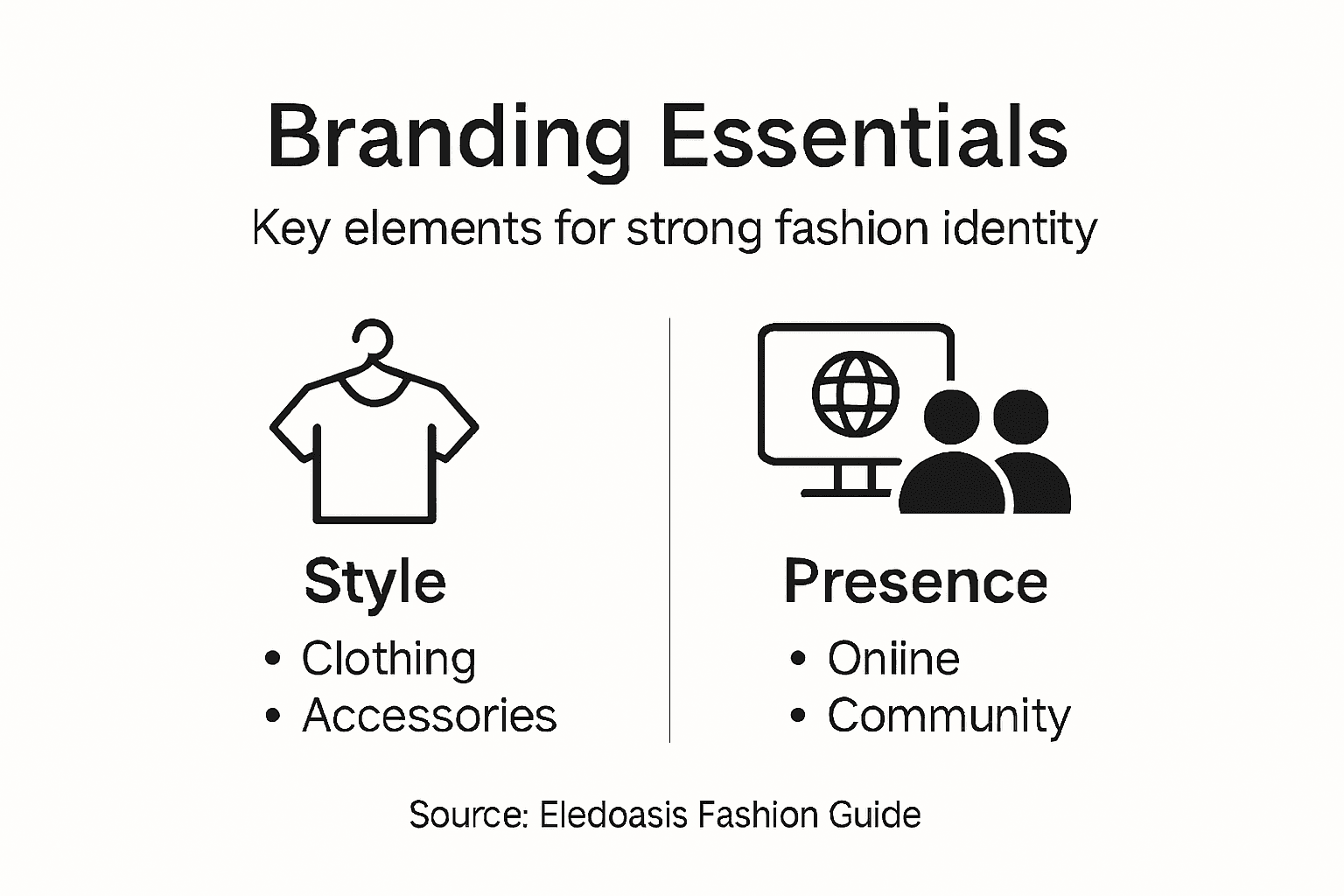
Here’s a summary of how each major type of personal brand expression contributes to your overall brand impact:
| Expression Type | Main Focus | Key Benefit |
|---|---|---|
| Visual Style | Outward clothing and look | Immediate recognition |
| Reputation & Credibility | Reliability and consistency | Trust and authority |
| Online Presence | Digital platforms and voice | Wider audience reach |
| Community & Networking | Social and industry circles | Broader influence and support |
This table clarifies at a glance what each expression type emphasizes and the unique value it adds to building your brand.
How Fashion Strengthens Self-Identity
Fashion isn’t superficial. It’s one of the most direct ways you communicate who you are to yourself and the world. When you wear something intentionally, you’re not just covering your body—you’re reinforcing your sense of self.
Fashion as a Mirror of Your Inner Self
Fashion acts as a medium for communicating personal identity through deliberate style choices. Your outfits reflect your values, beliefs, and how you see yourself psychologically.
This happens on a subconscious level too. When you wear clothes that align with your identity, you feel more confident. That’s not coincidence—it’s psychology. Your clothes reinforce your self-concept and influence how you move through the world.
The Identity-Strengthening Loop
Here’s how it works: you choose pieces that reflect who you are, you wear them, people respond positively, and your sense of self strengthens. This cycle builds over time.
Streetwear culture amplifies this. When you wear bold, intentional pieces, you’re making a statement about your identity. Each time someone recognizes your style, you feel validated in who you are.
The strengthening happens through:
- Consistent self-expression — Repeatedly presenting the same identity reinforces it internally
- Social validation — Others recognizing and affirming your style solidifies your identity
- Personal confidence — Wearing what feels authentic makes you feel more like yourself
- Cultural positioning — Your style places you within communities that share your values
Authenticity Strengthens Identity More Than Trends
Wearing pieces because they’re trending versus wearing them because they’re authentically you creates different outcomes. Authentic choices strengthen your identity; trend-chasing weakens it.
When you choose pieces aligned with your actual values and aesthetic, you’re building a coherent self. When you constantly shift to follow trends, your identity becomes fragmented.
Fashion as Active Identity Construction
Fashion enables authentic self-presentation and strengthens personal identity through intentional style choices. You’re not discovering who you are; you’re actively constructing it.
Each purchase, each outfit combination, each time you get dressed is an act of identity construction. You’re literally building yourself through fashion choices.
The Connection Between Wardrobe and Self-Concept
Your wardrobe functions as an extension of your psychological self. When your closet contains pieces that genuinely represent you, your self-concept strengthens. When it’s filled with pieces you don’t connect with, identity becomes confused.
This is why a wardrobe audit can feel transformative. Removing pieces that don’t represent you and adding pieces that do is clarifying. You’re literally aligning your physical identity with your internal self-concept.
Your fashion choices are identity statements. Each outfit is an opportunity to reinforce who you are becoming.
Pro tip:Write down 5-7 core values that define you, then evaluate if your wardrobe reflects them. Keep pieces that align; replace pieces that don’t. Your style will feel more authentic and confident immediately.
Impacts on Career, Influence, and Community
Your personal brand in fashion isn’t just about self-expression—it directly affects your career trajectory, how much influence you hold, and your standing within communities. The numbers prove it: people with strong personal brands advance faster and build larger networks.
Career Advancement Through Personal Branding
Personal brand equity correlates with job satisfaction and salary progression across professional fields. A cohesive personal brand positions you as someone worth investing in.
In fashion industries especially, your personal brand is your portfolio. Designers, stylists, and fashion entrepreneurs with recognizable aesthetics attract collaborations, job offers, and client work. Your style becomes your credential.
Career impacts include:
- Faster advancement — Strong personal brands lead to leadership opportunities
- Better compensation — Recognizable brand presence correlates with higher salaries
- Job flexibility — Your reputation creates options and negotiating power
- Entrepreneurial advantage — Personal brands make launching independent ventures more viable
Building Professional Networks and Social Capital
Your personal brand expands your social capital significantly. People remember you. They recommend you. They want to collaborate with you. This isn’t luck—it’s strategic brand building.
When you have a recognizable style and consistent presence, you become someone people gravitate toward. In streetwear communities, fashion teams, and creative industries, this visibility translates to opportunities.
Visibility and Influence Within Communities
Strategic personal branding expands professional influence and community reach. You become a voice people listen to. Your opinions on trends matter. Brands want your endorsement.
Influence doesn’t require millions of followers. It requires consistency, authenticity, and clear positioning. A person with 5,000 devoted followers who trust their aesthetic has more actual influence than someone with 50,000 random followers.
The Ripple Effect on Your Community
When you strengthen your personal brand, you elevate your entire community. You model what authentic self-expression looks like. You create spaces where others feel safe doing the same.
Young people in streetwear culture especially look to peers with strong personal brands as examples. Your style choices inspire others. Your visibility creates pathways for people like you.
Real Outcomes: Where This Matters Most
Personal branding affects tangible outcomes across multiple dimensions:
- Freelance and creative work — Brands hire based on your portfolio and aesthetic
- Collaboration opportunities — Designers and brands partner with people whose styles align
- Speaking and mentoring roles — Communities invite recognized voices to lead
- Partnership and collaboration deals — Your brand value increases what you can negotiate
Why Your Generation Has an Advantage
You’re growing up with tools that previous generations didn’t have. You can build a global personal brand from anywhere. Your style can reach people worldwide instantly.
But this also means competition is fiercer. The people who win aren’t trying to copy trends—they’re building distinct personal brands that stand out and maintain relevance.
A strong personal brand creates a compounding advantage: more opportunities lead to more visibility, which generates more opportunities.
Pro tip:Identify 2-3 people in your desired field with strong personal brands and study their consistency over 6 months. Note how they position themselves, what they collaborate on, and how their influence translates to opportunities.
Common Pitfalls and How to Avoid Them
Building a personal brand in fashion is rewarding, but it’s easy to stumble. Most people make predictable mistakes that undermine their authenticity and derail their progress. Knowing what to avoid saves you time and credibility.
Pitfall 1: Prioritizing Aesthetics Over Authenticity
The biggest mistake? Building a brand that looks good but doesn’t feel like you. Personal branding pitfalls include fostering inauthenticity and brand misalignment when external pressure overrides genuine self-expression.
You end up with a wardrobe and online presence that exhausts you because you’re constantly performing instead of being. People sense this disconnect immediately. Your brand becomes fragile.
How to avoid it:
- Build your brand around what genuinely excites you, not what’s trending
- Ask yourself: “Would I wear this if nobody was watching?”
- Regularly audit your choices for authentic alignment
Pitfall 2: Confusing Personal Branding With Self-Promotion
There’s a difference between sharing your authentic style and constantly broadcasting yourself. Over-promotion feels desperate and inauthentic. It repels rather than attracts.
People with strong brands let their work speak. They don’t need constant promotion because their consistency and authenticity do the talking.
Pitfall 3: Expecting Instant Results
Personal branding is a long game. You won’t build genuine influence in three months. Expecting rapid success leads to frustration and abandonment.
Consistency over years builds credibility. Recognize this is a marathon, not a sprint.
Pitfall 4: Neglecting Strategic Coherence
Common misconceptions about personal branding include overemphasizing superficial traits while ignoring broader strategic alignment. A cohesive brand connects your visual style, values, actions, and messaging.
Without this coherence, your brand feels scattered. People don’t know what you actually stand for.
Strategic coherence requires:
- Clear personal values that guide decisions
- Consistent visual identity across platforms
- Authentic skill representation aligned with goals
- Messaging that reflects who you actually are
Pitfall 5: Copying Instead of Creating
Studying successful personal brands is smart. Copying them is suicide. Your brand’s power comes from originality, not imitation.
Your specific combination of influences, perspective, and style is unique. Lean into that rather than replicating someone else’s formula.
Pitfall 6: Abandoning Your Brand When It Evolves
Your personal brand should evolve as you grow. But some people completely reinvent themselves every few months, confusing audiences and destroying credibility.
Evolution means deepening your brand, not erasing it. Your core identity stays recognizable while your expression matures.
Pitfall 7: Ignoring Regular Evaluation
You can’t maintain a strong brand if you’re not regularly checking whether your presentation still aligns with your current values and goals.
Schedule quarterly audits: Are your pieces still authentic to you? Does your online presence reflect who you’ve become? Is your messaging clear? Adjust accordingly.
A personal brand built on authenticity requires regular maintenance and honest self-assessment, not constant reinvention.
Pro tip:Document your personal brand positioning in a simple one-page statement covering your core values, visual identity, and what you stand for. Review it quarterly and adjust only when your actual identity shifts, not when trends change.
Build Your Authentic Personal Brand With Bold Streetwear Style
The article highlights the challenge of creating an authentic personal brand that truly reflects your identity and values rather than simply chasing fleeting trends. Key pain points include the difficulty of maintaining consistency, expressing uniqueness, and strengthening self-identity through fashion choices. If you want your style to communicate confidence, build trust, and expand your influence in streetwear culture, you need apparel that aligns with and enhances your personal brand elements—like visual identity and authenticity.
At Eledoasis we offer a visionary selection of streetwear-inspired fashion designed to help you stand out while staying true to who you are. Whether you are searching for signature hoodies, statement tees, or unique accessories, our collections fuse art, symbolism, and bold self-expression. These are perfect for those who are ready to own their style and create lasting impressions, not just fleeting trends.
Explore styles that help you curate a consistent, authentic visual language and connect with communities that share your ethos. Don’t wait to make your personal brand a powerful tool for career, influence, and self-confidence.
Shop bold streetwear apparel
Discover accessories that complete your look
Learn more about the brand vision and lifestyle
Elevate your personal brand now with statement-making apparel that speaks your truth. Visit Eledoasis.com and start building the authentic, influential style your future self will thank you for.
Frequently Asked Questions
What is personal branding in fashion?
Personal branding in fashion involves creating a unique identity through style choices that communicate who you are and what you value. It reflects your authenticity and evolves as you grow.
Why is personal branding important for self-expression in fashion?
Personal branding is crucial for self-expression as it allows individuals to convey their identity and values through their clothing choices. In a culture that celebrates individuality, a strong personal brand acts as your currency in social spaces and creative industries.
How can I ensure my personal brand in fashion remains authentic?
To maintain authenticity in your personal brand, choose pieces that genuinely resonate with you instead of following trends. Regularly assess your wardrobe to align it with your core values and personal identity.
What are the main components of a strong personal brand in fashion?
The main components include visual identity (signature colors and styles), values alignment (reflecting your beliefs), consistency (repeated elements that create recognition), authenticity (genuine choices), and evolution (allowing your brand to grow with you).
Recommended
- Streetwear vs High Fashion – Why It Matters Today – ELEDOasis
- Role of Art in Fashion Marketing: Impact on Identity – ELEDOasis
- Role of Storytelling in Fashion – Powering Self-Expression – ELEDOasis
- Fashion and Identity – How Style Shapes You – ELEDOasis
- Designer-Inspired Footwear: Style Without the Price Tag – Dracoslides
- Visual Branding for Phone Case Sellers: Boosting Online Sales – Bettermockups