Role of Culture in Streetwear – How Identity Shapes Style
Standing in front of your closet, have you ever wondered why a graphic hoodie or a favorite pair of sneakers just feels right? For style-conscious young adults, these choices are not random—they are rooted in cultural influence as a form of self-expression. From New York’s hip-hop origins to Tokyo’s layered minimalism, streetwear reflects deeper social ties, values, and personal identity. Unlocking this connection can transform your style into a true expression of who you are within today’s global streetwear movement.
Table of Contents
- Defining Culture’s Influence on Streetwear
- Origins: Streetwear’s Cultural Roots and Evolution
- Global Perspectives and Cross-Cultural Exchange
- Art, Music, and Symbolism in Streetwear Expression
- Personal Identity, Community, and Urban Youth Trends
Key Takeaways
| Point | Details |
|---|---|
| Cultural Influence | Streetwear acts as a reflection of cultural identity, with choices in style driven by personal, community, and global influences. |
| Communication Through Fashion | Each piece of streetwear communicates a message about beliefs and affiliations, transforming clothing into a form of cultural expression. |
| Authenticity and Roots | Understanding streetwear’s origins in urban youth culture is essential for meaningful engagement with personal style and authenticity. |
| Global Exchange | The rise of digital platforms has created a worldwide dialogue in streetwear, allowing for diverse expressions while respecting cultural roots. |
Defining Culture’s Influence on Streetwear
Culture isn’t just background noise in streetwear—it’s the engine that drives everything. Your choices in style, the brands you wear, and the messages your outfit sends all stem from cultural forces shaping who you are.
Think of culture as the invisible blueprint. It determines what counts as cool, what symbols matter, and which styles signal belonging to specific communities. Streetwear functions as a form of cultural communication, where every piece carries meaning beyond its physical form.
How Culture Shapes Personal Identity
Your streetwear choices express your internal world. Culture provides the vocabulary for that expression—the codes, symbols, and aesthetics your community understands. When you pick a specific brand, silhouette, or color palette, you’re drawing from a cultural toolkit built by countless influences.
Self-identity and social belonging drive brand preference in streetwear, meaning culture shapes not just what looks good, but what feels right to you personally. Your style becomes a statement about your values, your social circles, and your place in the world.
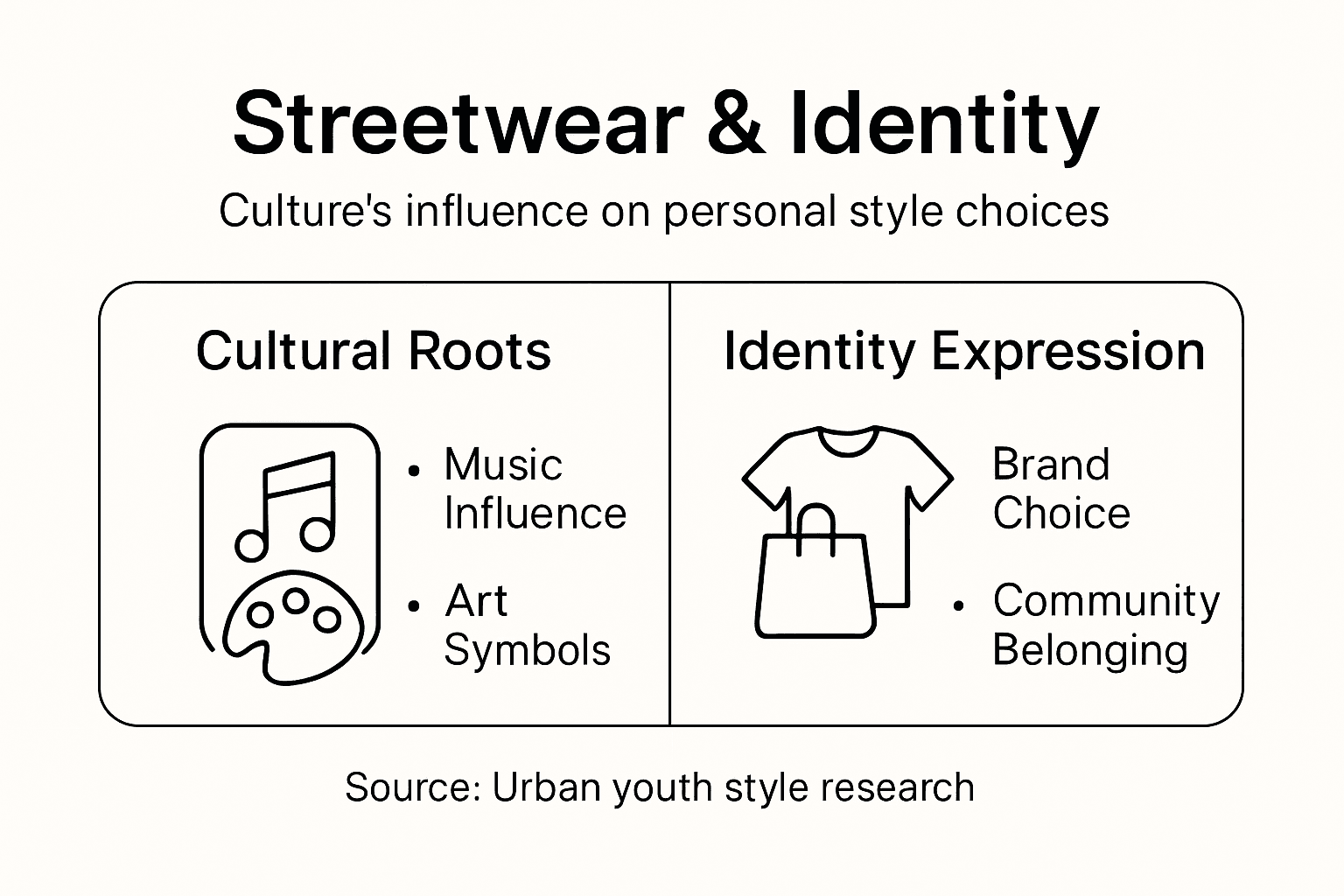
Culture operates at multiple levels:
Here’s a summary of how streetwear culture operates across different levels:
| Level of Influence | Key Focus | Impact on Streetwear | Example Marker |
|---|---|---|---|
| Personal | Individual beliefs and taste | Shapes style originality and comfort | Unique brand choices |
| Community | Shared group values | Establishes aesthetic norms | Subculture dress codes |
| Global | International trends | Spreads movements and innovation | Social media trends |
| Generational | Era-specific references | Creates new visual identities | Vintage throwbacks |
- Personal level: Your family background, neighborhood, and individual experiences shape aesthetic preferences
- Community level: Peer groups, subcultures, and local scenes define what’s acceptable and desirable
- Global level: International trends, social media, and cross-cultural exchange influence broader streetwear movements
- Generational level: The era you grow up in creates distinct style signatures and cultural references
Culture as a Communication System
When you wear streetwear, you’re communicating. Every hoodie, hat, or graphic tee sends signals about who you are and what you believe in. These signals only work because culture provides the shared understanding that makes them readable.
A vintage band tee isn’t just fabric—it’s cultural shorthand. A limited-edition drop represents community status. A specific brand aesthetic signals values and lifestyle alignment. Culture makes all these meanings possible.
Your style tells a story that only makes sense within your cultural context, transforming clothing from function into identity.
The Social Identity Connection
Culture ties you to groups. Streetwear lets you visually claim membership in those communities. Whether it’s skate culture, hip-hop influence, or underground fashion movements, your wardrobe choices announce your affiliations.
This goes beyond shallow tribalism. Cultural affinity through streetwear connects you to:
- Shared values and worldviews
- Historical movements and artistic traditions
- Artistic expression and creative communities
- Resistance narratives and social commentary
- Innovation and forward-thinking approaches to style
Your clothes become a bridge between your internal identity and external expression, powered entirely by cultural understanding.
Pro tip: Before buying a piece, ask yourself what cultural message it sends and whether it authentically represents your values—this intentionality transforms generic clothing into genuine self-expression.
Origins: Streetwear’s Cultural Roots and Evolution
StreetWear didn’t appear in designer showrooms—it emerged from the streets. The culture grew out of underground subcultures where young people created their own aesthetic rather than following traditional fashion rules. Understanding where streetwear came from helps you appreciate what you wear today.
The Birth of a Movement
Streetwear’s roots trace to urban youth cultures and skateboarding in the 1970s and 1980s, when kids rejected mainstream fashion entirely. These weren’t calculated trends—they were survival strategies and artistic statements born from specific communities.
Two major cultural forces shaped early streetwear:
- Skateboarding culture: Athletes needed durable, functional clothing that let them move freely. Baggy pants, sturdy sneakers, and graphic tees became the uniform of rebellion.
- Hip-hop movement: Musicians and dancers from New York created a visual language through bold oversized fits, tracksuits, and sneaker culture that expressed confidence and community pride.
These subcultures weren’t separate—they fed each other, creating a shared aesthetic rooted in authenticity and resistance.
From Underground to Mainstream
Streetwear historically functioned as expression of sociocultural identity and resistance, giving marginalized youth a voice when society ignored them. By the late 1980s and 1990s, what started in skate parks and neighborhood blocks became impossible to ignore.
The transition happened gradually. Early streetwear brands emerged from these communities—created by the actual people living the culture, not corporate executives trying to capitalize on trends. That authenticity mattered then and still does now.
Streetwear evolved from necessity and rebellion into a legitimate cultural force that shaped global fashion.
Why These Origins Still Matter
Knowing streetwear’s roots changes how you think about your wardrobe. Every oversized silhouette, every graphic, every sneaker choice carries the DNA of skaters and hip-hop artists who needed clothes to match their lives and values.
This matters because:
- You’re participating in a culture with real history and meaning
- Authenticity traces back to these original communities
- Understanding the “why” prevents hollow imitation
- Respecting origins means respecting the people who created the movement
When you wear streetwear, you’re connected to decades of creative resistance and community building. That’s not just fashion—that’s cultural inheritance.
Pro tip: Research the founders and communities behind the brands you wear; knowing whether a piece comes from genuine cultural creators versus corporate co-option deepens your connection to authentic streetwear.
Global Perspectives and Cross-Cultural Exchange
StreetWear is no longer confined to specific cities or countries. What started in New York and Los Angeles now flows across every continent, adapting to local cultures while maintaining core identity. This global exchange has transformed streetwear into a genuinely worldwide language of self-expression.
How Digital Platforms Changed Everything
Social media erased geographical boundaries. A trend born in Tokyo reaches London within hours. A designer in Lagos influences creators in Berlin. Digital platforms facilitate cross-cultural exchange and adaptation in streetwear globally, creating real-time conversation across continents.
This isn’t one-directional flow. Young people worldwide aren’t copying—they’re remixing. They take global aesthetics and blend them with local traditions, creating hybrid styles that feel both universal and rooted in place.
Regional Variations Within Global Culture
StreetWear looks different everywhere, and that’s the point. Streetwear incorporates diverse cultural elements across societies worldwide, reflecting local aesthetics, climate, values, and artistic traditions.
Examples of regional expression:
Explore how major streetwear regions develop distinct styles:
| Region | Signature Elements | Style Focus |
|---|---|---|
| Japan | Layering, technical fabrics | Minimalism, innovation |
| Europe | Vintage mixing, sustainability | Fashion-forward, eco-awareness |
| Africa | Bold colors, patterns | Cultural symbolism |
| North America | Oversized fits, sneaker culture | Urban roots, pop influence |
- Japanese influence: Oversized silhouettes, technical fabrics, intricate layering, and minimalist color palettes dominate Tokyo’s scene
- European perspective: Vintage mixing, sustainability focus, and runway-inspired silhouettes shape London and Berlin aesthetics
- African creativity: Bold colors, pattern mixing, and cultural symbolism define vibrant streetwear movements across major cities
- Asian fusion: Street style blends traditional textiles with modern cuts in Seoul, Bangkok, and Shanghai
The Rise of Generation Z as Cultural Bridges
Young people today grew up with global streetwear culture from the start. They’re not learning American hip-hop style—they’re creating their own version informed by it. Generation Z uses streetwear to express intersecting identities: their nationality, their subculture, their values, and their artistic vision simultaneously.
This generation also prioritizes sustainability and authenticity. They research brand origins, support independent creators, and reject corporate appropriation of street culture.
Streetwear’s global evolution proves that culture transcends borders when it centers authenticity and allows genuine creative expression.
Understanding Your Place in This Exchange
When you wear streetwear today, you’re participating in a genuinely global conversation. Your style influences and is influenced by creators across the world. This exchange works best when it’s respectful—when you understand the cultural origins of what you wear and acknowledge the communities who shaped it.
Pro tip: Follow streetwear creators from different regions and countries; expose yourself to how other cultures interpret streetwear to develop a more globally informed and authentic personal style.
Art, Music, and Symbolism in Streetwear Expression
Your streetwear outfit tells a story. Every graphic, every color choice, every brand placement communicates something deeper than fashion. The connection between art, music, and symbolism makes streetwear a genuine form of cultural communication, not just clothing.
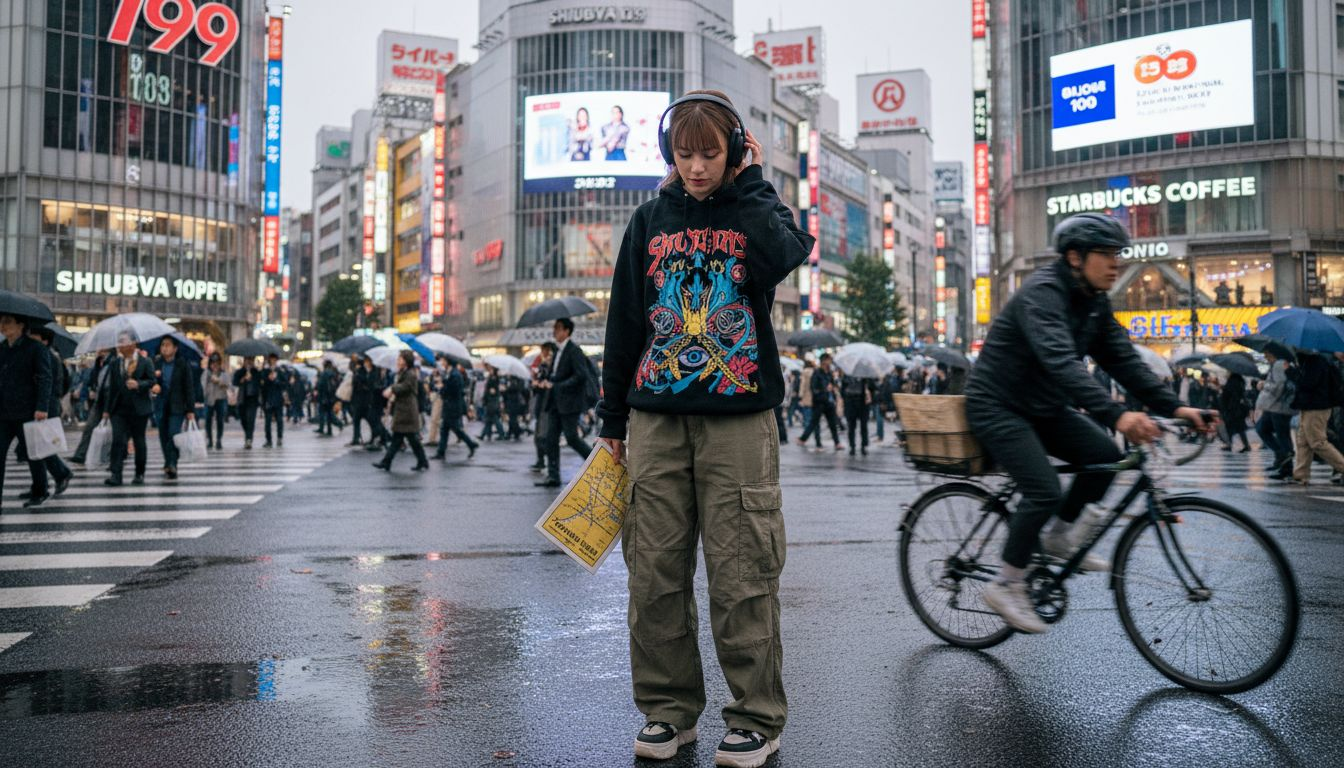
Music as the Foundation
StreetWear and music grew up together. Hip-hop artists didn’t just perform—they created visual identities through oversized silhouettes, bold colors, and statement pieces. Rock bands used graphic tees as mobile billboards for their movement. Electronic music scenes developed distinct aesthetics that influenced everything from Tokyo to Berlin.
This relationship goes both directions. Urban music genres directly influence streetwear aesthetics and cultural narratives, while streetwear artists create visuals that define how music sounds to audiences. A rapper’s outfit becomes inseparable from their music. A producer’s aesthetic influences their sonic identity.
Art and Visual Expression
StreetWear is wearable art. Graphic designers, painters, and illustrators use clothing as their canvas. Symbolic elements including brand logos and graphic designs serve as communicative tools reflecting social identities, transforming every piece into a statement about who you are.
Artists collaborate with brands to create limited editions that become cultural moments. Street muralists inspire graphic designers. Fine art movements influence color palettes and composition. Gallery aesthetics trickle down into everyday streetwear, blurring lines between high art and street culture.
The Power of Symbolism
Symbols in streetwear work like a secret language. A specific logo signals community membership. A color choice represents values or activism. A graphic references cultural moments or artistic movements. Understanding symbolic expression unlocks how streetwear communicates identity beyond words.
Common symbolic elements:
- Brand logos: Status, community alignment, personal taste
- Graphics and imagery: Political statements, artistic references, cultural moments
- Color choices: Mood, values, subcultural affiliation
- Text and typography: Direct messaging, poetic expression, activism
- Vintage and vintage-inspired pieces: Nostalgia, cultural memory, irony
Why This Matters to Your Style
When you understand art, music, and symbolism in streetwear, your choices become intentional. You’re not following trends—you’re making statements. Every piece carries meaning rooted in genuine cultural expression.
Streetwear transforms into powerful self-expression when you recognize the artistic and symbolic language embedded in every piece.
This awareness deepens your connection to what you wear. You become part of ongoing conversations about art, culture, and identity happening globally through fashion.
Pro tip: Research the artists and musicians who inspire the pieces you love; understanding their cultural context and artistic vision helps you wear pieces authentically rather than superficially.
Personal Identity, Community, and Urban Youth Trends
Your style is never just about you alone. It reflects your personal identity while simultaneously connecting you to communities, peer groups, and broader urban movements. Streetwear exists in this intersection—deeply personal yet undeniably collective.
How Personal Identity Shapes Style Choices
Every choice you make says something about who you are. Your confidence level, your values, your aspirations—all appear in what you wear. Streetwear serves as a tool for self-expression, confidence building, and social belonging, transforming clothing from functional items into identity statements.
Your personal identity isn’t fixed either. It evolves as you grow, experience new things, and discover new influences. Your streetwear wardrobe grows with you, becoming a visual timeline of who you’ve been and who you’re becoming.
The Community Connection
StreetWear connects you to tribes. Whether it’s skate culture, hip-hop communities, gaming culture, or underground art scenes, your style announces your affiliations. You’re not just wearing clothes—you’re claiming membership in communities that matter to you.
Streetwear functions as a cultural marker creating community among urban youth, with styles serving both individualistic and collective expressions. This balance is crucial: you maintain personal authenticity while feeling connected to others who share your values.
Community shapes your style in concrete ways:
- Social circles influence: Friends and peer groups normalize certain aesthetics and brands
- Cultural events matter: Concerts, festivals, and gatherings create shared style moments
- Collective identity: Your community’s values and history inform what feels right to wear
- Support and validation: Peers affirm your choices, building confidence in your personal expression
- Trend acceleration: What spreads through communities becomes what defines an era
Urban Youth Trends as Cultural Markers
Urban youth don’t follow trends—they create them. What emerges from city streets reflects real social dynamics, not fashion magazine predictions. Trends develop organically when young people respond to their environment, their music, their politics, and their creative energy.
Think about how quickly aesthetics shift in urban centers. A neighborhood develops a distinct look. That look spreads through social networks. Suddenly, cities worldwide adopt variations of that aesthetic. This process reveals how tightly personal identity, community, and broader trends intertwine.
Your personal style choices contribute to collective urban movements that define generational identity.
Finding Your Balance
The goal isn’t pure individuality or pure conformity. It’s authentic expression within community. You wear pieces that feel genuinely you while connecting to communities that resonate with your values and aesthetic sensibilities.
This balance looks different for everyone. Some lean heavily toward personal experimentation. Others prioritize community aesthetics. Most oscillate between both, finding their unique sweet spot.
Pro tip: Observe how your closest social circles dress, identify the shared values or aesthetics that attract you, then add personal elements that make pieces distinctly yours—this creates style that feels both authentic and connected.
Own Your Identity Through Bold Streetwear That Speaks Your Culture
The article highlights a key challenge many face today: how to express personal and cultural identity through fashion without losing authenticity. Your style is a powerful form of communication shaped by community, history, and creativity. Yet finding streetwear that truly embodies your values and unique story can be difficult amid mass-produced trends.
That is where Eledoasis.com steps in Offering visionary apparel inspired by art, music, and cultural symbolism, our collection goes beyond just looking good. Each piece is designed to help you confidently tell your story and connect with communities that matter. Whether you want hoodies that nod to underground movements or graphic tees blending bold colors and meaningful symbols, find styles that resonate with your identity.

Explore the freedom of authentic expression with streetwear that honors origins and empowers your voice. Visit Eledoasis.com to discover gear crafted with culture and creativity in mind. Start curating your wardrobe today and own the style that is distinctly yours. Don’t wait to make your statement—your authentic streetwear journey begins now.
Frequently Asked Questions
How does culture influence personal identity in streetwear?
Culture provides the vocabulary and symbols that individuals use to express their personal style in streetwear. It shapes the aesthetics, values, and community ties reflected in clothing choices.
What role does community play in streetwear style?
Community shapes streetwear style by establishing aesthetic norms and values that individuals adhere to. Peer groups influence what is considered acceptable and desirable within specific subcultures.
How can understanding streetwear’s cultural roots enhance personal style?
Knowing the cultural origins of streetwear helps individuals appreciate the historical and social significance behind their clothing choices, allowing them to make more intentional and authentic fashion decisions.
Why is symbolic expression important in streetwear?
Symbolic expression in streetwear serves as a form of communication. It allows wearers to convey their identity, values, and affiliations through logos, graphics, and color choices, transforming clothing into a statement of personal and cultural identity.