What is self-expression fashion? Guide to streetwear identity
Fashion is not just about what’s trending on the runway or blowing up on your feed. It’s a language, and every outfit you put on is a sentence you’re speaking to the world. Self-expression fashion is the use of clothing and style as a non-verbal medium to communicate who you are, what you value, and how you feel, and for streetwear fans, that language is louder and bolder than anywhere else. This guide breaks down what self-expression fashion really means, how streetwear makes it accessible, and how you can build a look that’s genuinely yours.
Table of Contents
- Defining self-expression fashion
- How streetwear amplifies self-expression
- Authenticity vs. conformity: The mental wellness angle
- Navigating edge cases: Rebellion, trends, and social media pressure
- Practical guide: Crafting your self-expression streetwear
- Level up your self-expression with streetwear essentials
- Frequently asked questions
Key Takeaways
| Point | Details |
|---|---|
| Fashion as self-expression | Your clothing choices are a powerful way to show your personality and values without words. |
| Streetwear’s creative space | The streetwear scene lets you experiment, personalize, and build bold looks unique to you. |
| Balance authenticity and trends | Mixing your own preferences with trends helps you stay authentic while connecting with others. |
| Well-being boost | Expressing your true self through fashion can increase confidence and mental well-being. |
Defining self-expression fashion
At its core, self-expression fashion communicates identity and values through clothing choices. It’s not about wearing what’s popular. It’s about wearing what’s true. Your outfit can signal your mood on a Tuesday morning, your cultural roots, your artistic influences, or your political stance, all without saying a single word.
For young adults especially, this matters. You’re in a phase of life where identity is actively being shaped. Fashion as identity gives you a tangible, daily tool to explore and declare who you’re becoming. That’s powerful.
Here’s what self-expression fashion can communicate:
- Mood and emotional state (calm neutrals vs. electric neons)
- Cultural ties and heritage (traditional prints, regional streetwear styles)
- Artistic values (graphic tees, hand-painted jackets, collage aesthetics)
- Community belonging (skate culture, hip-hop roots, punk influences)
- Personal rebellion (anti-trend choices, DIY modifications)
“Clothing is a form of self-definition. What you wear tells people who you are before you open your mouth.”
The streetwear fashion benefits go beyond aesthetics. Studies consistently show that people who dress with intention, aligning their clothing with their values, report stronger senses of self and greater confidence in social settings. Style is not shallow. It’s strategic.
With a clear sense of why self-expression is more than surface-level fashion, let’s get specific about what it looks like in the streetwear scene.
How streetwear amplifies self-expression
Streetwear is not just a category of clothing. It’s a culture built on the idea that style belongs to the streets, not the elite. Born from hip-hop, skate, and punk subcultures, it gave everyday people the tools to say something bold with what they wore. That DNA is still alive today.
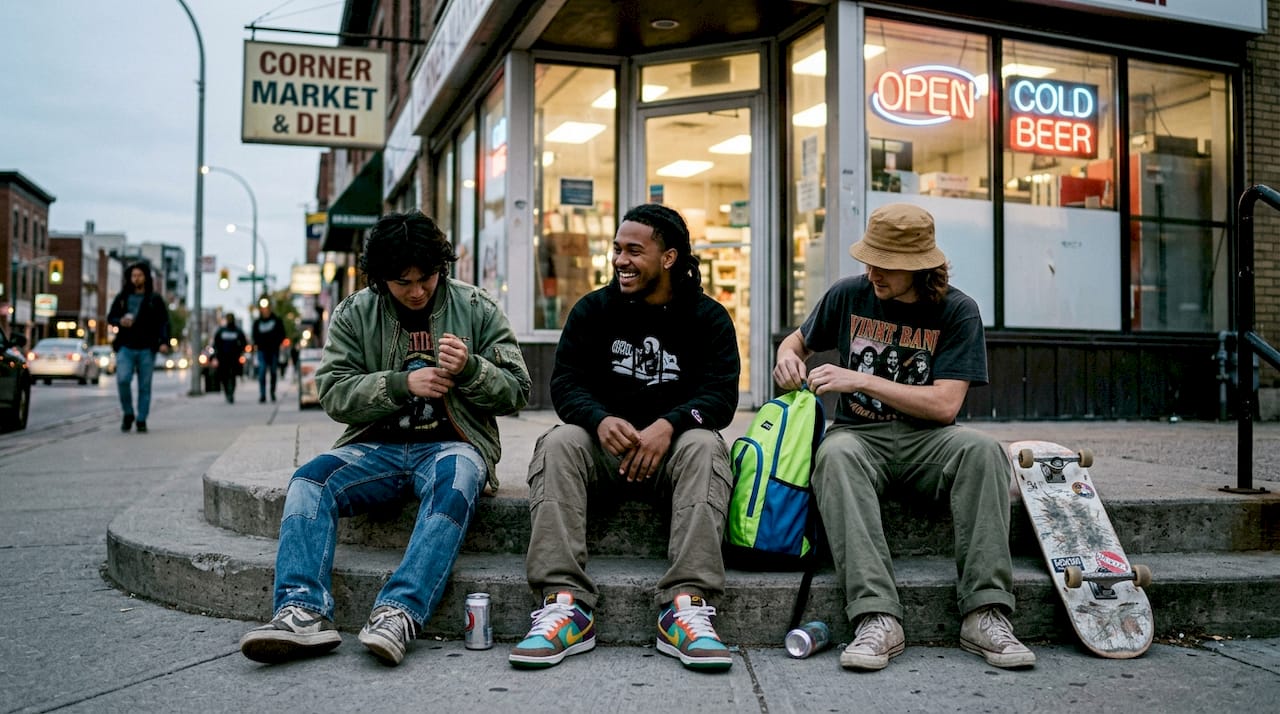
Streetwear self-expression involves experimentation with bold prints, logos, mixing influences from subcultures like hip-hop and skate, customization, and oversized fits to reflect rebellion, community belonging, and evolving personal style. The rise of individual expression in modern streetwear has made it one of the most democratic fashion movements in history.
Here’s how streetwear stacks up against mainstream fashion when it comes to self-expression:
| Feature | Streetwear | Mainstream fashion |
|---|---|---|
| Origin | Street culture, subcultures | Runway, designer houses |
| Customization | Encouraged, celebrated | Rare, discouraged |
| Trend cycle | Slower, community-driven | Fast, season-based |
| Accessibility | Wide price range | Often luxury-priced |
| Identity focus | Personal narrative | Brand narrative |
| DIY culture | Core to the ethos | Minimal |
Want to personalize streetwear and make it yours? Here are the most effective approaches:
- Start with one statement piece and build the rest of the outfit around it
- Mix subculture references (pair skate-inspired pants with a hip-hop graphic tee)
- Add DIY elements like patches, embroidery, or hand-painted details
- Experiment with logo placement by layering or deconstructing branded pieces
- Play with proportion using oversized fits, cropped layers, or unexpected silhouettes
For creative streetwear style tips that actually work in real life, the key is treating your outfit like a canvas. Every piece is a brushstroke.
Pro Tip: Pick one statement piece you genuinely love, whether it’s a graphic hoodie, a bold pair of sneakers, or a patterned jacket, and build your entire look around it. This keeps your outfit cohesive without feeling forced.
Authenticity vs. conformity: The mental wellness angle
Here’s where things get interesting. Not all fashion choices are created equal when it comes to your mental health. Research draws a clear line between two types of style orientation.
Style orientation is authentic and enduring. It’s rooted in your personal values and who you genuinely are. Fashion orientation is trend-driven and novelty-focused. It’s about chasing what’s new, what’s popular, and what earns social approval.
Research shows that style orientation positively links to well-being, while fashion orientation links to materialism and lower well-being. That’s not a small distinction. It means the way you approach getting dressed has real psychological consequences.
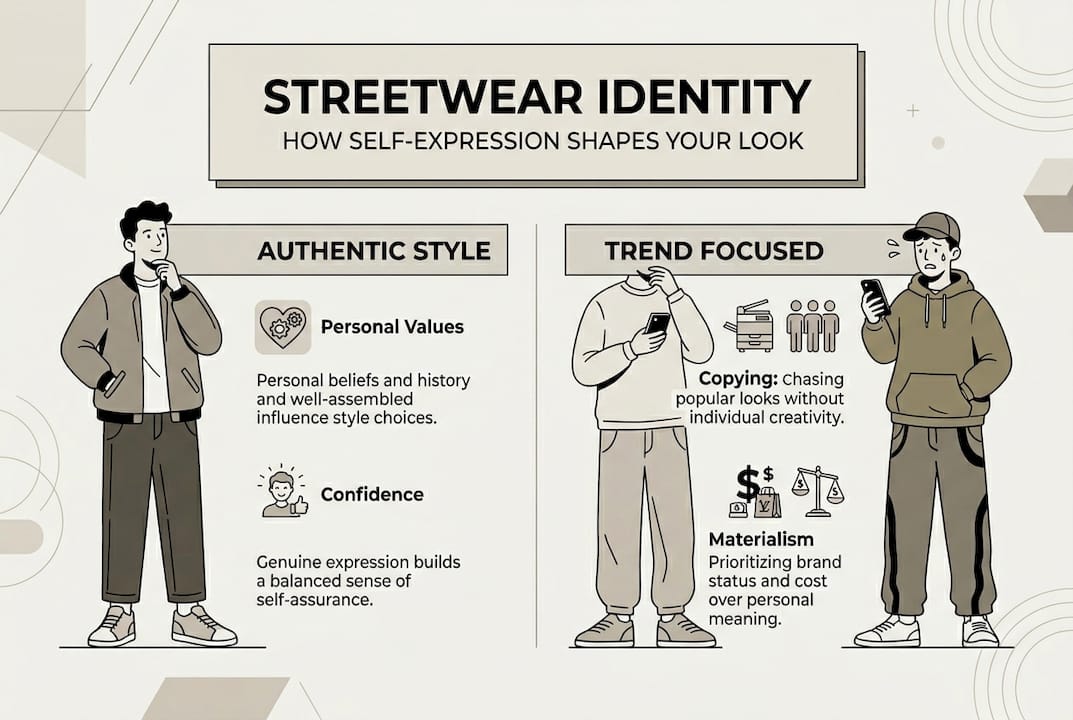
| Orientation | Psychological outcome | Relationship to identity |
|---|---|---|
| Style (authentic) | Higher well-being, confidence | Rooted in personal values |
| Fashion (trend-driven) | Materialism, lower well-being | Rooted in external approval |
| Conformity for belonging | Can hinder authenticity | Overrides personal values |
Fashion conformity can hinder self-expression when it overrides what you actually want to wear. Social media makes this worse. When you see the same aesthetic repeated across thousands of posts, the pressure to replicate it is real. But replication is not expression.
Here’s how to protect your authentic style in a trend-heavy world:
- Audit your wardrobe and ask which pieces you chose for yourself vs. for approval
- Identify your core values and think about how they could translate into visual choices
- Limit trend-chasing by setting a rule: only adopt a trend if it genuinely excites you
- Follow creators whose style feels personal and intentional, not just popular
- Reflect regularly on whether your current look still feels like you
“Authenticity in fashion is not about being different for the sake of it. It’s about being honest.” Explore the self-conformity discussion for a deeper look at this tension.
For a deeper look at fashion individualism and how it shapes streetwear identity, the conversation goes far beyond just picking clothes.
Pro Tip: Before planning an outfit, do a 30-second check-in. Ask yourself: does this reflect how I actually feel today, or am I dressing for someone else’s approval? That small habit builds long-term style confidence.
Navigating edge cases: Rebellion, trends, and social media pressure
Sometimes the most expressive fashion choices look like mistakes to outsiders. That’s kind of the point. Anti-aesthetic fashion, think deliberately “ugly” shoes like Crocs or chunky dad sneakers, started as rebellion and became a cultural statement. Wearing something that breaks conventional beauty rules is itself a form of self-expression.
Anti-aesthetic choices like “ugly” Crocs represent rebellion and self-expression, while branded clothing creates ambivalence between personal desire and social status signaling. This tension is real and worth sitting with. Are you wearing that logo because you love the brand, or because you want others to see you wearing it?
Some of the most iconic streetwear movements built their identity on defying norms:
- Hip-hop culture turned oversized fits and gold chains into power symbols
- Skate culture made worn-out, beat-up gear a badge of authenticity
- Punk influence used safety pins and ripped fabric as political statements
- Gorpcore made outdoor utility gear fashionable in urban settings
- Techwear merged function with futurism as a form of identity
Social pressure from trends and social media can create real conflict between authentic style and group belonging. The algorithm rewards conformity. Feeds fill up with the same aesthetic repeated endlessly, and it’s easy to feel like you’re falling behind if you’re not wearing what everyone else is wearing.
“The most powerful style statement you can make is one that doesn’t need anyone else’s validation to feel complete.”
For inspiration on brands that have built identity around bold individuality, check out these inspirational streetwear brands that have stayed true to their roots while pushing creative boundaries.
Practical guide: Crafting your self-expression streetwear
Theory is great. But you need to actually get dressed in the morning. Here’s a step-by-step approach to building a streetwear look that’s genuinely expressive and authentically yours.
Streetwear’s DIY ethos and subculture roots provide a clear methodology: observe your mood and values, mix boldly, and customize. This stands in direct contrast to fast fashion’s cycle of buying and discarding without intention.
Step-by-step: Build your expressive streetwear look
- Start with your mood or message. What do you want to communicate today? Energy, calm, rebellion, creativity?
- Choose your anchor piece. One item that carries the most visual weight, a graphic tee, a statement jacket, or bold footwear.
- Build your base. Neutral or complementary pieces that support the anchor without competing with it.
- Add a texture or pattern contrast. Mix materials like denim with fleece, or cargo with silk-touch fabrics.
- Customize one element. Add a pin, patch, or hand-drawn detail that makes the outfit uniquely yours.
- Check the full look. Does it feel like you? If something feels off, swap it out without overthinking.
Additional tips for mixing, matching, and customizing:
- Don’t match everything perfectly. Intentional clashing is a streetwear signature.
- Experiment with gender-neutral silhouettes. Oversized fits and layering work across all body types.
- Repurpose old pieces. Cut, dye, or stitch them into something new.
- Shop secondhand. Vintage pieces carry history and make your look harder to replicate.
For a deeper breakdown, the guide on how to style streetwear for self-expression walks through real outfit-building strategies. And if you’re working from scratch, the personalize streetwear essentials guide covers the foundational pieces worth investing in.
Pro Tip: Keep a style journal. Snap a photo of every outfit you feel genuinely good in. Over time, you’ll start to see patterns in what actually reflects you, and that becomes your personal style blueprint.
Level up your self-expression with streetwear essentials
Knowing your style is one thing. Having the right pieces to bring it to life is another. At ELEDOasis, every item is designed with bold self-expression in mind, from the graphics to the silhouettes to the feel of the fabric against your skin.
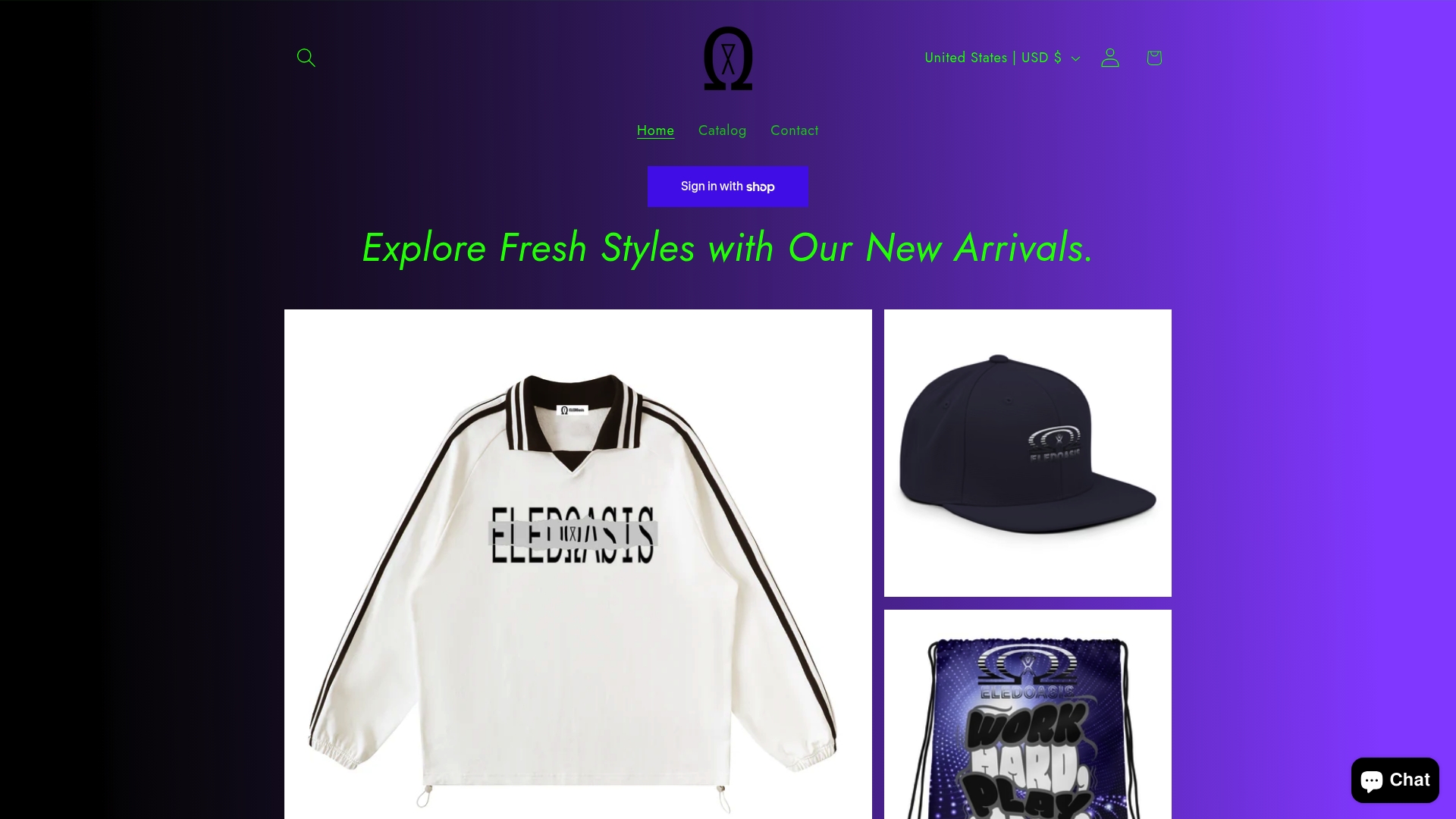
If you’re building out your expressive wardrobe, the unisex casual sweats are a versatile anchor piece that works across multiple aesthetics. For a bolder street-ready look, the urban sweatpants bring premium construction and a distinct visual edge. Both pieces are built to be worn your way, styled up, styled down, or customized to fit your vision. Browse the full ELEDOasis collection and find the pieces that speak your language.
Frequently asked questions
How can I start expressing myself through fashion if I’m new to streetwear?
Start with one bold piece, like a graphic hoodie or unique sneakers, and pair it with simple basics. The streetwear DIY ethos encourages experimentation, so don’t overthink it.
Can you express individuality while following streetwear trends?
Absolutely. Customization and subculture mixing let you use trends as a starting point while layering in your own creative choices to keep the look personal.
Is there a mental health benefit to authentic self-expression in fashion?
Yes. Style orientation boosts well-being and confidence, while trend-chasing is linked to materialism and lower satisfaction. Dressing authentically is genuinely good for you.
How do I avoid just copying others while building my style?
Focus on pieces that reflect your actual personality and values. Authenticity comes from within, not from replicating what looks good on someone else’s feed.