What Is Conscious Fashion and Why It Matters
Choosing what to wear goes beyond picking a shirt that looks cool on the streets of New York or Seoul. Conscious fashion has sparked a shift that challenges fast fashion’s cycle of overproduction and labor exploitation by putting ethical sourcing and social responsibility at the heart of your wardrobe. As global streetwear communities demand style without compromise, understanding this movement will help you navigate myths, spot greenwashing, and discover how mindful choices turn personal expression into real impact.
Table of Contents
- Defining Conscious Fashion And Common Misconceptions
- Core Principles: Ethics, Sustainability, Impact
- How Conscious Fashion Works In Streetwear
- Personal Style And Mindful Purchasing Decisions
- Risks, Greenwashing, And What To Avoid
Key Takeaways
| Point | Details |
|---|---|
| Understanding Conscious Fashion | Conscious fashion emphasizes ethical production, sustainable materials, and mindful consumption, challenging the traditional fast fashion model. |
| Identifying Greenwashing | Consumers should be vigilant against misleading claims by researching brands’ transparency and verifying their sustainability practices. |
| Empowering Personal Choices | Mindful purchasing transforms fashion into a statement of personal values and social responsibility, promoting quality over quantity. |
| Impact of Conscious Streetwear | Streetwear serves as a catalyst for conscious fashion, encouraging sustainable practices while merging style with ethical values. |
Defining Conscious Fashion and Common Misconceptions
Conscious fashion represents a revolutionary approach to clothing that goes far beyond simple aesthetic choices. It’s a holistic philosophy centered on understanding the profound environmental and social impacts of our wardrobe decisions. Conscious fashion challenges the traditional fast fashion model by prioritizing ethical production, sustainable materials, and mindful consumption.
At its core, conscious fashion recognizes that every clothing item tells a complex story - from the raw materials sourced to the hands that crafted it, and its eventual environmental footprint. Fashionable ethics explores critical systemic challenges throughout the fashion lifecycle, revealing how our choices impact labor conditions, environmental sustainability, and global social dynamics.
Common misconceptions about conscious fashion often prevent people from engaging with this transformative approach:
- Myth: Conscious fashion is only for wealthy consumers
- Myth: Sustainable clothing is always boring or unstylish
- Myth: Individual choices don’t make a significant difference
- Myth: Ethical fashion is just a passing trend
In reality, conscious fashion represents a nuanced approach that balances style, personal expression, and responsible consumption. Conscious communities challenge systemic inequalities by reimagining how we produce, consume, and think about clothing.
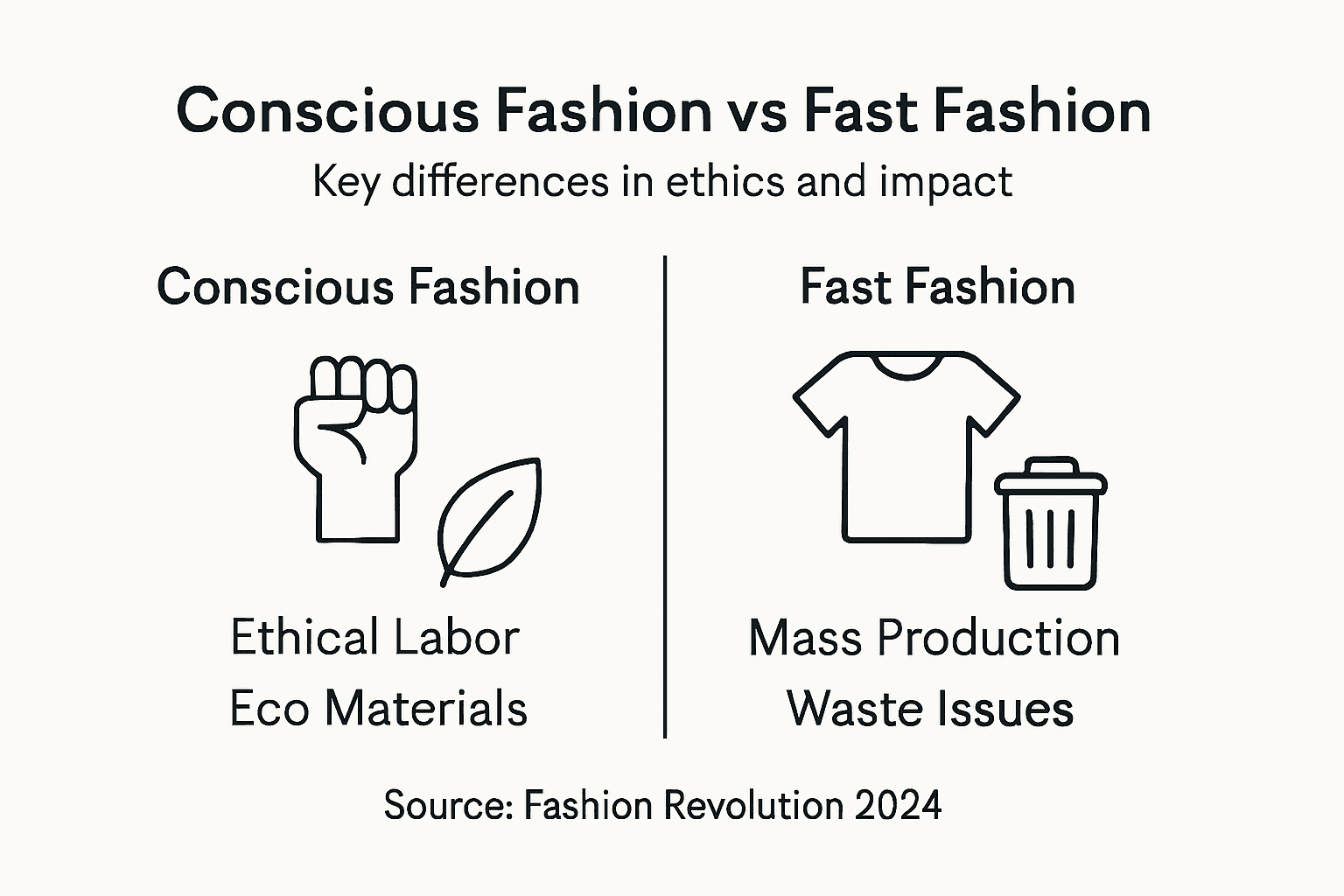
Here’s a quick comparison of fast fashion and conscious fashion:
| Aspect | Fast Fashion | Conscious Fashion |
|---|---|---|
| Production Speed | Rapid, mass volumes | Slower, intentional output |
| Material Sourcing | Low-cost, often synthetic | Sustainable, ethical sources |
| Pricing Approach | Focused on low prices | Reflects ethical practices |
| Environmental Impact | High waste, pollution | Reduced emissions, less waste |
| Labor Practices | Prone to exploitation | Prioritizes fair treatment |
Pro tip: Start your conscious fashion journey by evaluating your current wardrobe, researching brands with transparent supply chains, and making intentional purchasing decisions that align with your values.
Core Principles: Ethics, Sustainability, Impact
Conscious fashion is built on foundational principles that transform how we understand clothing production and consumption. At its heart, this approach reimagines sustainability across apparel lifecycles, challenging traditional fashion industry practices by prioritizing ethical considerations and environmental responsibility.
Core ethical principles in conscious fashion encompass several critical dimensions:
- Transparency in supply chain operations
- Fair and safe labor practices
- Minimizing environmental impact
- Promoting social justice through economic empowerment
- Reducing waste and overconsumption
The systemic challenges are profound. Fast fashion’s current model perpetuates significant global inequalities, with production often occurring in regions where labor regulations are weak and environmental protections are minimal. Ethical dimensions of fashion involve complex supply chain challenges, requiring a comprehensive approach that balances economic growth with social responsibility.

Conscious fashion isn’t just about individual purchasing decisions - it’s a holistic movement challenging entire industry structures. By demanding accountability, consumers and designers can collaboratively create meaningful change, transforming fashion from a resource-intensive industry into a force for positive social and environmental transformation.
Pro tip: Start evaluating fashion brands by researching their supply chain transparency, labor practices, and environmental commitments before making purchasing decisions.
How Conscious Fashion Works in Streetwear
Streetwear has become a powerful platform for conscious fashion, transforming from a mere clothing style into a movement of social and environmental responsibility. Conscious fashion practices are reshaping urban identity through innovative approaches that challenge traditional production methods and consumer behaviors.
The mechanics of conscious streetwear operate through several key strategies:
- Utilizing sustainable and recycled materials
- Implementing transparent supply chain practices
- Designing for durability and longevity
- Supporting local and ethical manufacturing
- Creating limited edition collections to reduce waste
- Educating consumers about environmental impact
Beyond material choices, conscious streetwear represents a deeper cultural shift. It’s about creating clothing that tells a story - connecting individual style with broader social and environmental values. Brands are now demonstrating that street fashion can be both aesthetically cutting-edge and deeply principled, challenging the notion that ethical clothing compromises design quality.
The impact extends far beyond individual wardrobes. Conscious streetwear creates a ripple effect, inspiring communities to rethink consumption, challenge fast fashion’s environmental footprint, and view clothing as a form of personal and collective expression that reflects deeper commitments to social justice and sustainability.
Pro tip: Research streetwear brands that provide detailed transparency reports and invest in regenerative manufacturing processes to truly align your wardrobe with conscious fashion principles.
Personal Style and Mindful Purchasing Decisions
Personal style is no longer just about looking good - it’s a powerful statement of individual values and social consciousness. Mindful consumerism transforms fashion choices into deliberate acts of personal and environmental responsibility, challenging the traditional consumption paradigm.
Mindful purchasing strategies involve several key principles:
- Pause before buying and assess genuine need
- Research brand ethical practices
- Prioritize quality over quantity
- Choose versatile, timeless pieces
- Support brands with transparent supply chains
- Consider long-term environmental impact
- Invest in durable, multi-purpose clothing
Understanding personal style through a conscious lens means recognizing that every garment tells a story. Each purchase becomes an intentional decision that reflects not just aesthetic preferences, but deeper commitments to social justice, environmental sustainability, and ethical manufacturing practices.
By embracing mindful shopping, individuals transform their wardrobes from passive collections into active statements of personal philosophy. Deliberate fashion choices strengthen personal identity while simultaneously challenging the destructive cycles of fast fashion and overconsumption.
Pro tip: Create a personal style inventory that tracks the origin, materials, and ethical credentials of your clothing to make more informed and intentional purchasing decisions.
Risks, Greenwashing, and What to Avoid
Greenwashing represents one of the most insidious challenges in conscious fashion, where brands create misleading narratives about their environmental credentials. Consumer skepticism challenges misleading sustainability claims by exposing deceptive marketing tactics that undermine genuine sustainability efforts.
Common greenwashing red flags include:
- Vague environmental claims without specific metrics
- Imagery of nature without substantive ecological practices
- Highlighting one sustainable feature while ignoring broader environmental impacts
- Using complex terminology to appear more eco-friendly
- Making unverifiable sustainability promises
- Displaying misleading eco-certifications
- Emphasizing recyclability without addressing production practices
Digital tools help consumers recognize greenwashing tactics by providing transparency and critical analysis of brand claims. The most effective approach involves deep research, understanding industry standards, and developing a critical lens toward marketing communications.
Authentic conscious fashion demands rigorous verification. Brands genuinely committed to sustainability will provide comprehensive, verifiable information about their supply chains, material sourcing, labor practices, and environmental impact - not just superficial marketing claims.
The following table summarizes strategies consumers can use to identify genuine conscious fashion brands versus those engaging in greenwashing:
| Action | Genuine Brands | Greenwashing Brands |
|---|---|---|
| Supply Chain Details | Public, specific reports | Vague or missing information |
| Sustainability Claims | Measurable and verifiable | Generic, unverifiable claims |
| Certifications | Recognized, up-to-date | Dubious or self-awarded logos |
| Materials Disclosure | Detailed composition | Broad, unclear wording |
| Response to Questions | Transparent answers | Evasive or no response |
Pro tip: Always request detailed sustainability documentation from brands and cross-reference their claims with independent environmental certification organizations.
Embrace Conscious Fashion with Bold Streetwear Choices
Struggling to find clothing that truly aligns with your values while making a style statement is a common challenge. This article highlights how conscious fashion is about ethics, environmental impact, and mindful choices — not sacrificing style or personal expression. At ELEDOasis, you can bridge that gap by exploring our collection of Sustainable Apparel Organic Cotton that brings together responsible materials and streetwear-inspired designs. Discover apparel that speaks your individuality without compromising the planet or social justice.

Act now to redefine your wardrobe with fashion that’s both visionary and responsible. Visit ELEDOasis to explore unique streetwear pieces crafted with transparency and care. Make each purchase a deliberate, empowering decision that reflects your conscious values and bold style.
Frequently Asked Questions
What is conscious fashion?
Conscious fashion is a holistic approach to clothing that emphasizes ethical production, sustainable materials, and mindful consumption, challenging the fast fashion model.
What are the core principles of conscious fashion?
The core principles include transparency in supply chains, fair labor practices, environmental sustainability, social justice promotion, and waste reduction.
How can individuals start practicing conscious fashion?
Individuals can begin practicing conscious fashion by evaluating their wardrobe, researching brands for transparency, prioritizing quality items, and making thoughtful purchasing decisions based on ethical and environmental factors.
What is greenwashing, and how can consumers avoid it?
Greenwashing is the misleading portrayal of a brand’s environmental efforts. Consumers can avoid it by recognizing vague claims, verifying sustainability certifications, and seeking detailed information about supply chain practices.